Jiangsu Xindake Connection Technology Co., Ltd. offers you free information and the latest news on battery connectors, battery pack inserts, e-bike battery nickel strips, nickel-plated strips and more. Stay tuned!
Jiangsu Xindake Connection Technology Co., Ltd. offers you free information and the latest news on battery connectors, battery pack inserts, e-bike battery nickel strips, nickel-plated strips and more. Stay tuned!


What problems can occur when stamping stamping parts? What causes material flipping and distortion? Wuxi Xindake has the answer!
1. Causes of material flippage and twisting during stamping
In progressive dies, the shape of the stamped part is formed by punching the remaining material around the stamped part. The main cause of material flippage and twisting in stamped parts is blankingThe effect of force. During blanking, due to the presence of blanking clearances, the material is stretched (the material warps upward) on one side of the die and is compressed on the side near the punch. When using the discharge plate, using the discharge plate to press the material and prevent the material on the die side from warping upward, at which point the force on the material changes accordingly. As the discharge plate exerts the pressing force,The increase is due to the material on the punch side being subjected to tension (compressive force tends to decrease), while the material on the die surface is subjected to compression (tensile force tends to decrease). The flipping of the stamped part is precisely because of the concaveThe material on the die surface is stretched. Therefore, during blanking, pressing and tightening the material is key to preventing material flipping or twisting of the stamped part.
2. Methods to prevent stamping parts from flipping or twisting
(1). Reasonable mold design. In progressive dies, the arrangement of the blanking sequence may affect the forming accuracy of stamped parts. It is aimed at the small parts of the stamped pieces.Material is generally first arranged for punching and cutting of larger areas, and then for punching and cutting of smaller areas, in order to reduce the impact of punching force on the forming of stamped parts.
(2). Pressing the material. Overcoming traditional mold design structures, a material storage gap is created on the discharge plate (i.e., when the mold is closed, the discharge plate fits closely with the die, allowing spaceThe gap between the discharge plate and the die at the sodium is a material thickness t-0.03~0.05mm). In this way, the discharge plate moves smoothly during stamping, and the material can be pressed tightly. Key forming is keyThe discharge plate must be made with a modular structure to facilitate the reduction of wear (compression) damage caused by prolonged stamping, preventing material compression.
(3). Add a strong pressing function. That is, increase the thickness of the material-pressing part of the unloading insert block (normally the thickness of the unloading insert block H by 0.03mm) to increase the pressure on the material on the die cavity side, fromIt also prevents the punched parts from developing burrs and twisting deformation during punching.
(4). The end of the punch cutting edge is trimmed into an inclined surface or arc. This is an effective method to reduce the impact cutting force. Reducing the impact cutting force can lessen the tensile force on the material on the die side,This effectively suppresses material flipping and twisting in stamped parts.
(5). In daily mold production, attention should be paid to maintaining the sharpness of punched and die cutting edges. When the punching edge wears down, the tensile stress on the material increases, therebyThe tendency for material flipping and twisting in stamped parts increases.
(6). Unreasonable or uneven blanking clearances are also causes of material flipping and twisting of stamped parts and must be addressed.
3. Handling Common Specific Problems in Production
In daily production, there may be situations where the punch size is too large or too small (which may exceed specification requirements) or if the punch size differs significantly from the punch size. In addition to considering the forming punch,, the design dimensions of the die, machining accuracy, and blanking clearance, the following aspects should also be considered to address the issue.
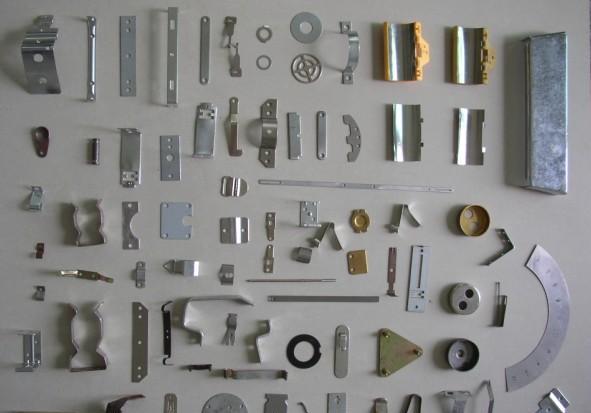
(1). When the cutting edge is worn, the tensile stress on the material increases, and the stamped parts tend to experience burrs and distortion. When burrs occur, the punching size tends to decrease.
(2). Applying high pressure to the material causes it to undergo plastic deformation, which will lead to an increase in the punching size. Conversely, reducing the high pressure will result in a smaller punching size.
(3). The shape of the punch edge end. For example, if the end is beveled or rounded, due to the reduction of punching force, the punched part is less likely to be overturned or twisted; therefore, the punched hole size maytends to increase. When the punch end is flat (without inclined or curved), the punching size tends to be smaller.
In specific production practice, specific analysis should be conducted for specific problems to find solutions.
The above mainly introduces the causes of material flipping and twisting in punchings and their solutions. Our company specializes in copper foil flexible connectors, copper busbar manufacturers, and stampingProcessing prices, etc. Thank you for your browsing and support!
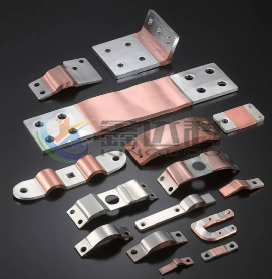
Copper and aluminum busbars are widely used in battery packs. Nowadays, the busbars are mostly made of multilayer copper foil/aluminum foil laminates as the base material, and are fabricated through a...
2026-08-05 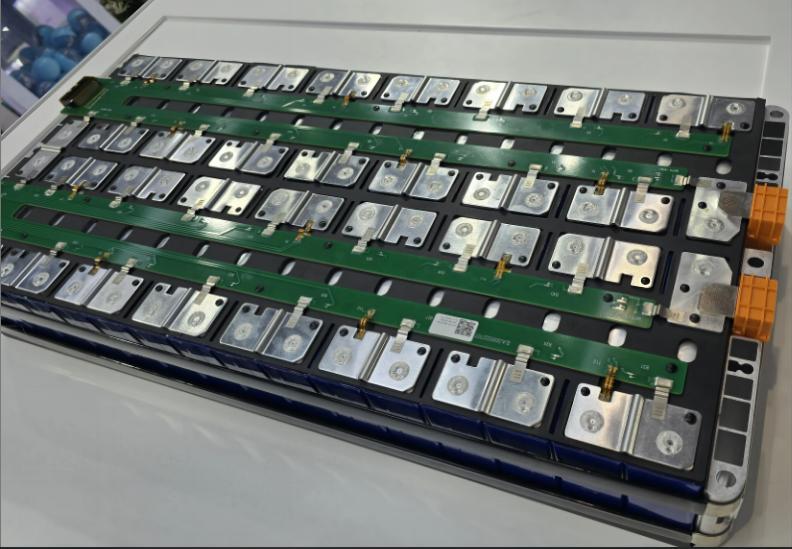
The CCS integrated busbar is mainly composed of signal acquisition components (such as FPC, PCB, FFC, etc.), plastic structural parts, nickel strips, copper busbars, aluminum busbars, etc. These are c...
2025-08-15 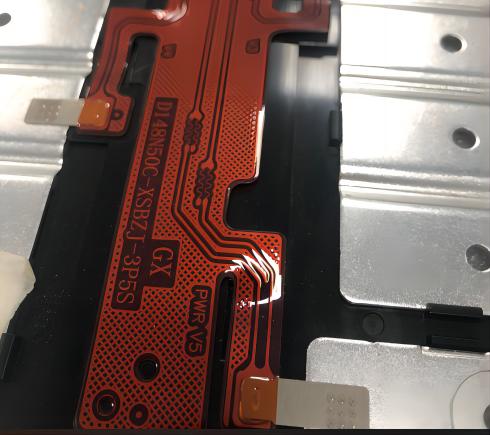
Nickel is a metal with significant industrial value, with a melting point of 1453°C, a boiling point of 3075°C, and a specific gravity of 8.8 g/cm³. It has excellent corrosion resistance, is not easil...
2025-08-15 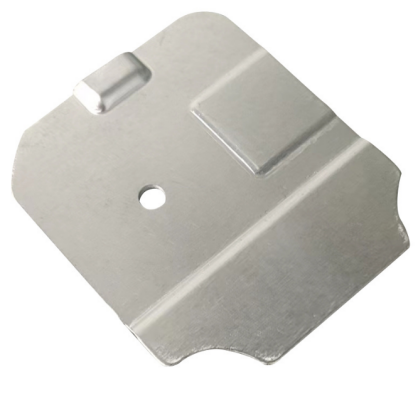
Product Name: Power battery soft aluminum busbar, battery module welding flexible connector aluminum busbar, battery soft aluminum busbar Product Material: 1060 O-temper aluminum foil strip, aluminum ...
2023-05-04Phone:
0510-87183933