Jiangsu Xindake Connection Technology Co., Ltd. offers you free information and the latest news on battery connectors, battery pack inserts, e-bike battery nickel strips, nickel-plated strips and more. Stay tuned!
Jiangsu Xindake Connection Technology Co., Ltd. offers you free information and the latest news on battery connectors, battery pack inserts, e-bike battery nickel strips, nickel-plated strips and more. Stay tuned!


1. Characteristics and designation system of nickel
1. Properties of nickel
Nickel is a metal with significant industrial value, with a melting point of 1453℃, boiling point 3075℃, specific gravity 8.8g/cm³. It has excellent corrosion resistance, is not easily oxidized in air, can remain stable even when heated to 700~800℃, and also has good weldability. These characteristics make it widely used in battery packs.
2. Domestic Brand Number System
With "N" is used as a prefix (representing nickel), and the numerical code reflects the purity level. Common grades are listed in the table below:
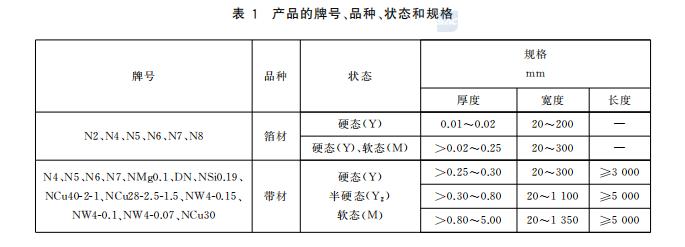
3. Processing status identification
Y: Hard state, deeply cold-worked with the highest strength (tensile strength ≥500MPa), hardness ≥200HV, poor plasticity (elongation ≤5%).
Y2: Semi-hard state, medium cold workability, balanced strength and ductility (tensile strength ≥400MPa, elongation ≥10%), hardness 150-180 HV, suitable for most structural parts.
M: Soft state, fully annealed, optimal plasticity (elongation can reach over 40%), lowest hardness (≤100HV), relatively low strength (300-350MPa), suitable for complex forming scenarios.
2. Nickel for copper-aluminum connections
1. Corrosion resistance and oxidation resistance
Nickel's corrosion resistance can solve the oxidation problems of copper and aluminum:
Hard plating nickelCoating thickness 3-20 μm (adjustable as needed), isolates water vapor and electrolyte volatiles, prevents the formation of high-resistance oxide film (CuO) on the copper surface, and maintains low contact resistance.
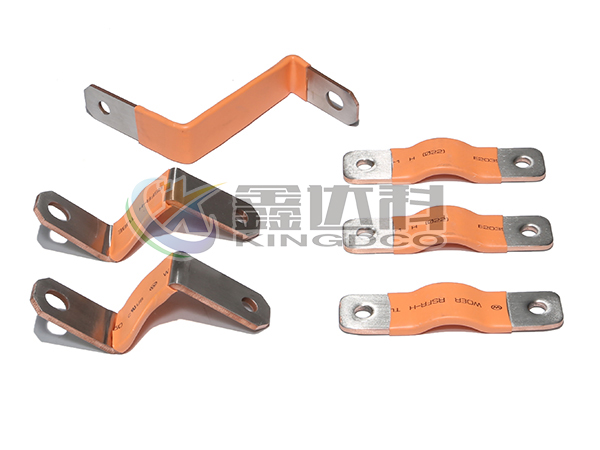
Soft copper aluminum busbar with nickel plates: adopted 0.1mm thick nickel strip (peel strength ≥ 3N/mm), forming a physical barrier to prevent conductive-differential oxide film formation on aluminum busbars (Al₂O₃), while using the ductility of nickel to buffer deformation and prevent coating from peeling off.
In comparison, tin plating at high temperatures (>At 100°C, it easily forms a loose oxide film (SnO)₂), causing the contact resistance to increase sharply, making it difficult to meet long-term reliability requirements.
2. Welding and Connection Performance
Nickel is used as a transition layer for connecting dissimilar materials, suitable for complex connection scenarios within battery packs:
Copper-aluminum connection: Using ultrasonic welding requires horizontal tensile strength≥1500N, vertical tensile strength ≥500N, welding area residue ≥1/3. Nickel can mitigate the difference in melting points between copper (1083°C) and aluminum (660°C), reducing brittle intermetallic compounds.
Aluminum-nickel connection: High polymer diffusion welding requires vertical tensile strength per unit width≥3N/mm, the compatibility of nickel can offset aluminum (23.1×10⁻⁶/℃) and nickel (13.3×10⁻⁶/°C) thermal expansion difference to prevent loose connections.
Busbar Processing: The output busbar uses electroplated nickel or electroless nickel plating (the latter has a more uniform coating but is more costly), reducing welding pores and cracks, and improving connection strength.
3. Inhibit electrochemical corrosion
Copper (0.34V) and aluminum (-1.66V) in direct contact are prone to form a galvanic cell, causing corrosion. The electrode potential of nickel (-0.25V) lies between the two, and using it as an intermediate layer can reduce the potential difference:
A physical isolation layer formed by nickel plating or pressing nickel strips reduces ion migration at the copper-aluminum interface, especially in high-humidity or electrolyte leakage scenarios, significantly extending component life.
3. nickel strip for voltage collection
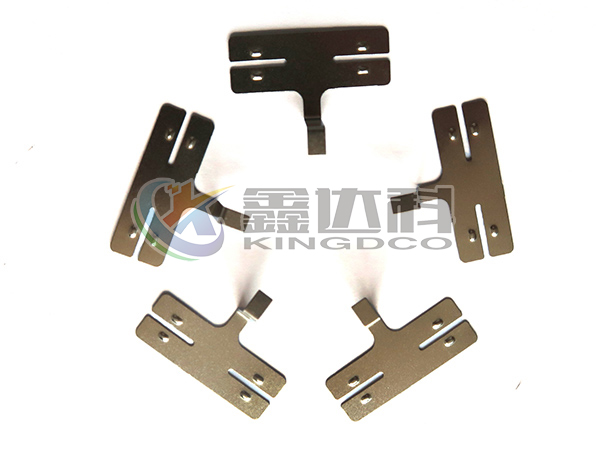
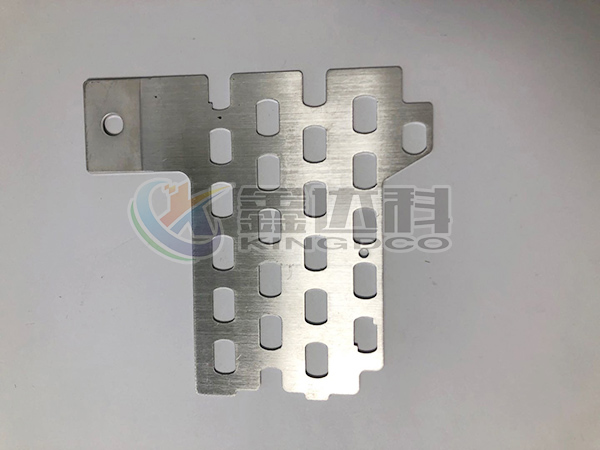
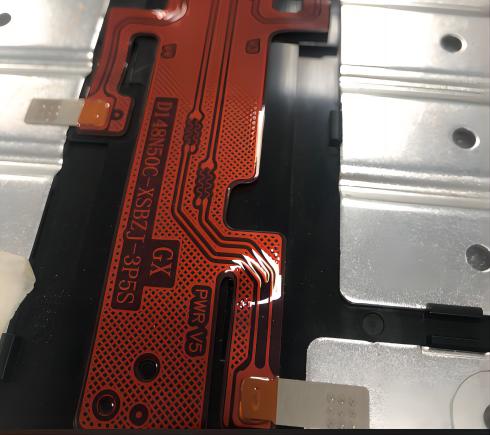
Voltage acquisition is the core of monitoring the battery cell status in a battery pack, generally usingN6 pure nickel Y2 semi-hard collection sheet, requirements are as follows:
1. Material compliance and basic performance
Pure nickel material, compliant withGB/T 2072-2020 Nickel and Nickel Alloy Strips and Foils Standard:
Tensile strength≥400 MPa, elongation ≥10%, able to withstand vibration and temperature cycles (-40~150°C), preventing connection breakage;
Hardness 150-180HV, which can balance tight fit and deformation buffering ability, reducing the impact of contact resistance fluctuations.
2. Surface Quality
The nickel strip collects the cell voltage and transmits the signal to the battery management system, so the surface quality requirements must be strict:
Flatness≤0.1mm, ensure close contact with the busbar and FPC;
Cleanliness RFU ≤ 100, control oil and impurities to prevent welding defects and local corrosion.
3. Welding and Connection Strength
The excellent weldability of nickel ensures reliable signal transmission:
nickel strips laser-welded to busbars (aluminum busbars): Horizontal Tension≥300N, peeling force ≥40N, laser energy concentrated to form a low-resistance weld seam (contact resistance 1~5mΩ);
nickel strip and FPC (copper foil) welding: Tin-plated welding parts (using low melting point properties), horizontal tensile≥100N, peel strength ≥25N, ensuring strength exceeds FPC copper foil load limit (about 90N), with non-welded parts retaining nickel's corrosion resistance.
4. Processing Cost
The application cost of nickel is significantly affected by materials and processes, with differences in various forms as follows:
1. Raw material cost
Nickel price dominates basic cost,In 2025, pure nickel (such as N6) is around 200,000-250,000 RMB/ton, much higher than copper (60,000-70,000 RMB/ton) and aluminum (18,000-20,000 RMB/ton).
2. Processing Technology Cost
Nickel plating: The cost of electroplating is approximately 1-3 yuan/dm² (3-20μm), and for every 5μm increase in thickness, cost increases by 30%-50%.
Pressed nickel strip:0.1mm thick N6 Y2 nickel foil material costs 0.5-1 yuan per piece (10cm²), accounting for 60%-70%; lamination process (ensuring peel strength ≥3N/mm) costs 0.2-0.3 yuan per piece, accounting for 30%-40%.
Voltage Acquisition nickel strip: Material Cost 1.2-1.5 yuan per piece (5cm²), precision processing (laser cutting, polishing, etc.) fee 0.8-1 yuan per piece, local tin plating adds 0.3-0.5 yuan per piece, total cost 2.3-3 yuan per piece, which is 3-5 times that of ordinary nickel pieces.
3. Replacement with copper-aluminum composite sheet
Principle of copper-aluminum composite sheet: copper ends and The copper foil on the FPC is soldered using reflow soldering, the aluminum ends are welded to aluminum busbars using laser welding, while avoiding welding between dissimilar metals. The cost is lower than pure nickel, and some manufacturers are currently conducting replacement verification.
Yixing Xindake New Energy Technology Co., Ltd.
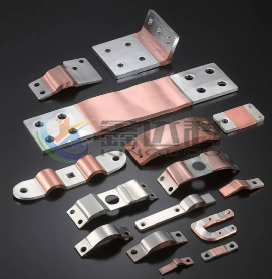
Copper and aluminum busbars are widely used in battery packs. Nowadays, the busbars are mostly made of multilayer copper foil/aluminum foil laminates as the base material, and are fabricated through a...
2026-08-05 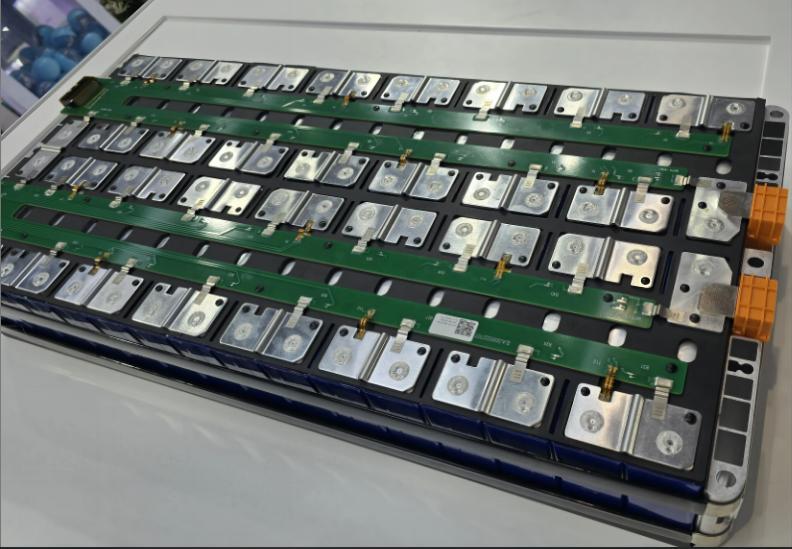
The CCS integrated busbar is mainly composed of signal acquisition components (such as FPC, PCB, FFC, etc.), plastic structural parts, nickel strips, copper busbars, aluminum busbars, etc. These are c...
2025-08-15 
Nickel is a metal with significant industrial value, with a melting point of 1453°C, a boiling point of 3075°C, and a specific gravity of 8.8 g/cm³. It has excellent corrosion resistance, is not easil...
2025-08-15 
Product Name: Power battery soft aluminum busbar, battery module welding flexible connector aluminum busbar, battery soft aluminum busbar Product Material: 1060 O-temper aluminum foil strip, aluminum ...
2023-05-04Phone:
0510-87183933