Jiangsu Xindake Connection Technology Co., Ltd. offers you free information and the latest news on battery connectors, battery pack inserts, e-bike battery nickel strips, nickel-plated strips and more. Stay tuned!
Jiangsu Xindake Connection Technology Co., Ltd. offers you free information and the latest news on battery connectors, battery pack inserts, e-bike battery nickel strips, nickel-plated strips and more. Stay tuned!


Stamping parts processingWhat common problems may occur? Yixing Xinda Ke is here to introduce! The specifics are as follows:
1. Adhesion and scratches: Defects that appear on the surface of the workpiece or mold due to friction between the material and the punch or die.
2. Burrs: Mainly occur in shearing dies and blanking dies; burrs can form when the gap between the cutting edges is too large or too small.
3. Line offset: When forming a part, the part that first contacts the mold is squeezed and forms a line
4. Unevenness: The presence of foreign objects (iron filings, rubber, dust) in the opening line causes unevenness.
5. Bending: Due to uneven stress, poor matching of drawing bars, or poor control of the press slider, bending or strain occurs at the corner or embossing area of the part
6. Wrinkles: Wrinkles on the edges or the R area are caused by poor adjustment of the press slider, low press precision, improper adjustment of the air cushion pressure, or large punch or R area.
7. Other specific issues: In daily production, situations may arise where the punching size is too large or too small (possibly exceeding specification requirements) or differs significantly from the punch size. In addition to considering factors such as the design dimensions of the forming punch and die, processing accuracy, and punching clearance, the following aspects should also be taken into account to solve these issues.
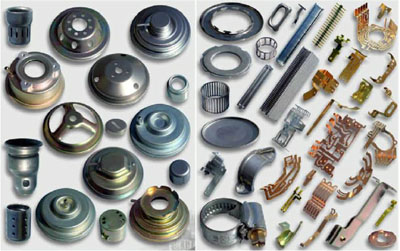
(1). When the punching edge wears, the tensile stress on the material increases, and the tendency for material turnover and twisting in stamped parts grows. When material flipping occurs, the punching hole size becomes smaller.
(2) Strong pressing on the material causes the material to undergo plastic deformation, which will lead to an increase in the punching size. Conversely, when the pressing force is reduced, the punching size tends to decrease.
(3) The shape of the punch edge end. If the end is machined into a bevel or arc, the punching force is reduced, making it less likely for the punched piece to flip or twist; therefore, the punching size tends to increase. When the punch end is flat (without a bevel or arc), the punching size tends to be relatively smaller.
8. Methods to prevent stamping parts from flipping or twisting
(1) Reasonable design of stamping part processing molds. In progressive dies, the arrangement of the blanking sequence may affect the forming accuracy of the stamped parts. For blanking small areas of stamped parts, it is generally recommended to first arrange the blanking of larger areas, and then arrange the blanking of smaller areas, in order to reduce the impact of punching force on the forming of the stamped parts.
(2) Press the material. Overcome the design structure of traditional stamping part processing molds by opening a material clearance on the stripper plate (that is, when the mold is closed, the material can still be pressed tightly). For critical forming areas, the stripper plate must be made into an insert structure to facilitate addressing wear (or press) damage on the pressing part of the stripper plate caused by long-term stamping, which would otherwise prevent the material from being pressed tightly.
(3) Add a strong pressing function. That is, increase the thickness of the pressure part of the unloading die insert (the normal thickness of the unloading die insert is H + 0.03mm) to increase the pressure on the material on the die side, thereby preventing material flipping and twisting deformation of the stamped parts during punching.
(4) The edge end of the punch is chamfered or rounded. This is an effective method to reduce punching force. Reducing punching force can lessen the tensile stress on the material on the die side, thereby helping to prevent flipping or warping of the stamped parts.
(5) In daily mold production, attention should be paid to maintaining the sharpness of the punch and die edges. When the edges of the punch are worn, the tensile stress on the material will increase, thereby increasing the tendency for the stamped parts to experience material flipping and twisting.
⑹. Unreasonable punching clearance or uneven clearance is also a reason for the flipping and twisting of stamped parts during processing, which needs to be overcome.
The above is the content compiled and shared by the editor for you. I hope it is helpful to you. If you want stamping parts processing and production in Wuxi, that would be Yixing Xindake New Energy Technology Co., Ltd. Our company specializes in copper foil flexible connectors, copper busbar manufacturing, stamping parts processing prices, and more. Thank you for your browsing and support!
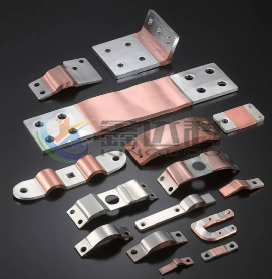
Copper and aluminum busbars are widely used in battery packs. Nowadays, the busbars are mostly made of multilayer copper foil/aluminum foil laminates as the base material, and are fabricated through a...
2026-08-05 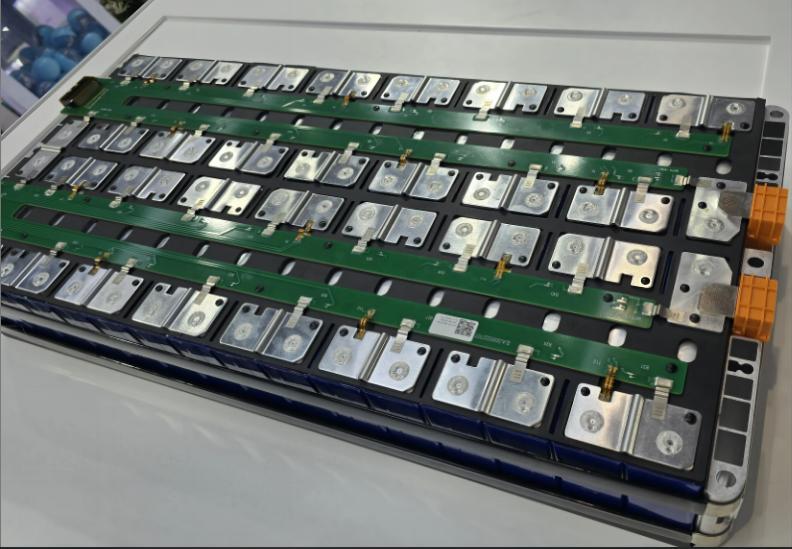
The CCS integrated busbar is mainly composed of signal acquisition components (such as FPC, PCB, FFC, etc.), plastic structural parts, nickel strips, copper busbars, aluminum busbars, etc. These are c...
2025-08-15 
Nickel is a metal with significant industrial value, with a melting point of 1453°C, a boiling point of 3075°C, and a specific gravity of 8.8 g/cm³. It has excellent corrosion resistance, is not easil...
2025-08-15 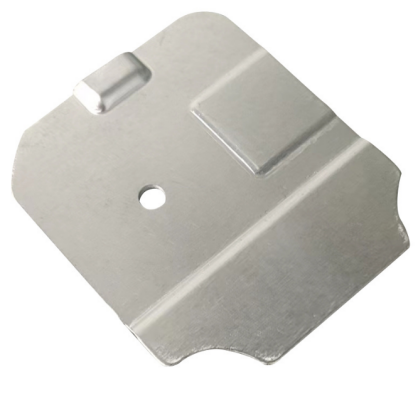
Product Name: Power battery soft aluminum busbar, battery module welding flexible connector aluminum busbar, battery soft aluminum busbar Product Material: 1060 O-temper aluminum foil strip, aluminum ...
2023-05-04Phone:
0510-87183933