Jiangsu Xindake Connection Technology Co., Ltd. offers you free information and the latest news on battery connectors, battery pack inserts, e-bike battery nickel strips, nickel-plated strips and more. Stay tuned!
Jiangsu Xindake Connection Technology Co., Ltd. offers you free information and the latest news on battery connectors, battery pack inserts, e-bike battery nickel strips, nickel-plated strips and more. Stay tuned!


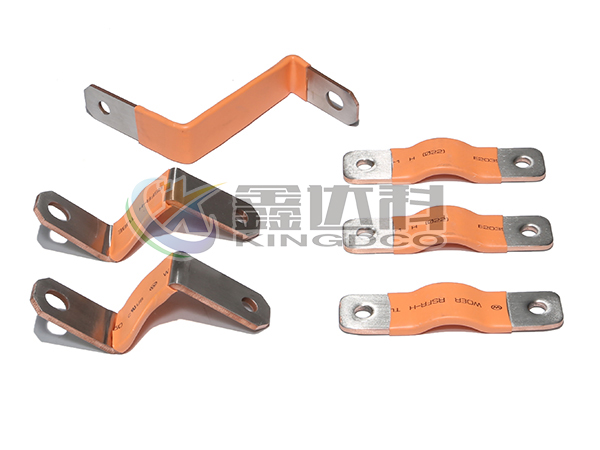
Everyone, yesCopper foil flexible connectorsAre you familiar with it? With the accelerated development of our country's industry, higher requirements are being put forward for industrial products, especially the use of new energy vehicles, wind power, solar energy, and so on. The production of copper foil flexible connectorsThe process mainly involves two types: pressure welding and brazing. The processing methods include grinding the head, punching, perforating, washing, packaging, flattening, etc. Below, the editor will provide a detailed introduction to the process and processing of copper foil flexible connectors.
Manufacturing process of copper foil flexible connectors: pressure welding and brazing
1. Pressure welding flexible connector: Pressure welding involves pressing the laminated parts of copper foil together, using molecular diffusion welding to form the form through high-current heating; Copper foil: 0.05mm to 0.3mm thick.
2. Brazed flexible connector: Brazing involves pressing the stacked copper foil parts together, using silver-based solder, affected by the flat copper block. The copper foil flexible connector uses T2 copper foil, which is slit to the width required by the customer, and undergoes high-polymer dispersion soldering orArgon arc welding technology performs molten pressure welding, and the entire surface or surface can be treated with silver, tin, and nickel plating.
Processing method of copper foil flexible connectors:
1. Flat head, ground head (1) Small workpieces use a belt grinder to grind the ends, sides, chamfers, or burrs. (2) Large workpieces use a milling machine to polish the ends, and the sides are processed by grinding. (3) Special processes use other equipment for processing separately.
2. Punching, edge trimming, and forming must be carried out strictly according to the drawings and process specifications to ensure they are within tolerance, with smooth hole walls and burr-free openings. If during punching, rough hole walls, flanged openings, or instability are found, return it to welding for rework.New processing and production.
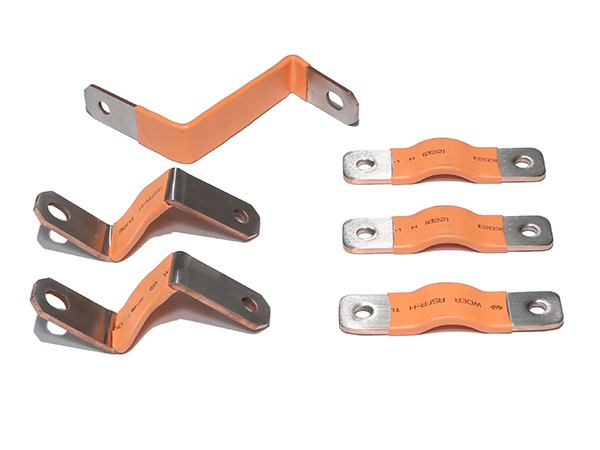
3. Chemical plating or cleaning, washing (1) Plating must meet customer requirements, such as coating thickness, plating medium (silver, nickel, tin) (2) In the pre-treatment of plating, it is necessary to ensure the original thickness of the copper foil on the upper and lower surfaces of the workpieceDegree, it cannot corrode for a long time. (3) The plated workpiece must be promptly cleaned with water or other cleaning agents after plating to remove residual chemical solutions and prevent secondary corrosion. (4) After drying, anti-oxidation treatment must be done or good electrical contact protection must be ensured.For workpieces with copper strips attached to the surface of the shield (5), passivation is used to maintain the original color, and then sealing treatment is properly done. Electrical contact protection is generally referred to as cleaning and washing, which means cleaning and washing workpieces with silver-plated copper strips, nickel-plated copper strips, or other differently plated workpieces.Perform water polishing to make the surface shiny, followed by sealing treatment.
4. Shaping and Packaging (1) Perform bending and shaping, riveting, and applying heat shrink tubing according to process requirements (2) Flatten (3) Complete inspection records
5. Flattening: Wider surface (1) For some products with higher requirements and relatively strong consistency, it is recommended not to sand the sides, but to use jigs and molds to apply pressure over a wider area, making it relatively flat. (2) Adjust the welding length of the workpiece.Flat, operate with a small hydraulic press, then press the middle soft tape part (3). Bubbles or spots on the surface that cannot be pressed out need to be polished with a cloth wheel.
The above is the knowledge about copper foil flexible connectors shared by the editor. Manufacturers must strictly follow the standard requirements during processing; only in this way can the processing quality be guaranteed and more applications in production be achieved.When processing copper foil flexible connectors, the reason for choosing the two production processes of pressure welding and brazing is mainly because they can press the copper foil layers together, improving production quality.
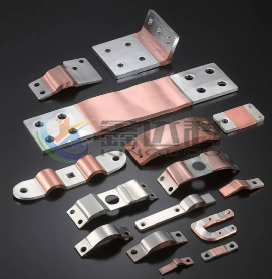
Copper and aluminum busbars are widely used in battery packs. Nowadays, the busbars are mostly made of multilayer copper foil/aluminum foil laminates as the base material, and are fabricated through a...
2026-08-05 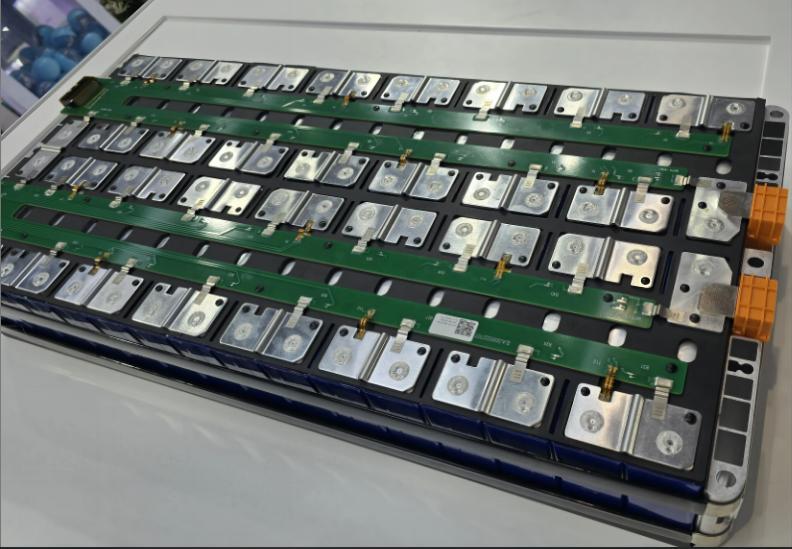
The CCS integrated busbar is mainly composed of signal acquisition components (such as FPC, PCB, FFC, etc.), plastic structural parts, nickel strips, copper busbars, aluminum busbars, etc. These are c...
2025-08-15 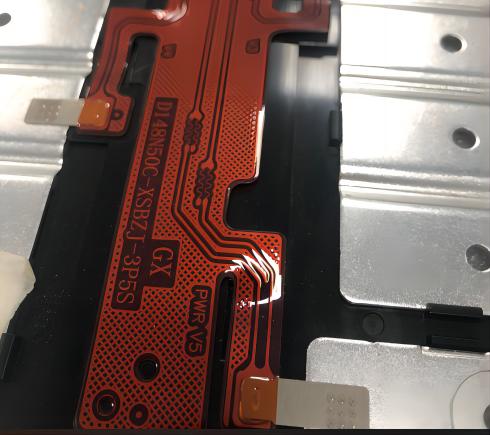
Nickel is a metal with significant industrial value, with a melting point of 1453°C, a boiling point of 3075°C, and a specific gravity of 8.8 g/cm³. It has excellent corrosion resistance, is not easil...
2025-08-15 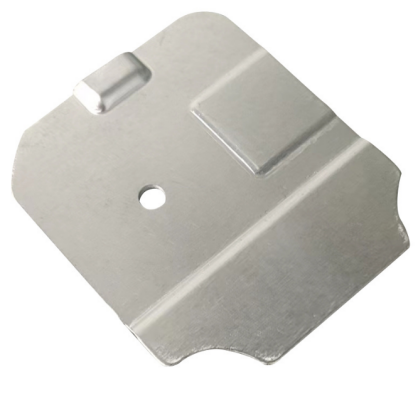
Product Name: Power battery soft aluminum busbar, battery module welding flexible connector aluminum busbar, battery soft aluminum busbar Product Material: 1060 O-temper aluminum foil strip, aluminum ...
2023-05-04Phone:
0510-87183933