Jiangsu Xindake Connection Technology Co., Ltd. offers you free information and the latest news on battery connectors, battery pack inserts, e-bike battery nickel strips, nickel-plated strips and more. Stay tuned!
Jiangsu Xindake Connection Technology Co., Ltd. offers you free information and the latest news on battery connectors, battery pack inserts, e-bike battery nickel strips, nickel-plated strips and more. Stay tuned!


BelowCopper bus manufacturerLet me explain the technologies related to copper busbars. Let's take a look at the techniques related to copper plaques, and we will do our utmost to serve you.
Introduction: Copper busbars are a type of high-current conductive product, suitable for high and low voltage electrical appliances, switch contacts, power distribution equipment, busway, and other electrical engineering projects. They are also widely used in ultra-high current electrolysis and smelting projects in metal smelting, electroplating, and chemical caustic soda industries. Our supplied electrical copper busbars have advantages such as low resistivity and high bendability.
What is a copper busbar? What is the function of a copper busbar? What are the surface treatment methods for copper busbars? Is there an introduction to relevant knowledge about copper busbars? First, let’s understand an overview of copper busbars: A copper busbar is a high-current conductive product suitable for high and low voltage electrical appliances, switch contacts, distribution equipment, bus duct, and other electrical projects. It is also widely used in ultra-high current electrolytic smelting projects such as metal smelting, electroplating, and caustic soda production in the chemical industry. The copper busbars we supply for electrical work have the advantages of low resistivity and high bendability.
Copper busbar, also known as copper main bus, copper bus, or copper distribution bar, grounding copper busbar, is made of copper material, with a cross-section in the shape of a rectangle or chamfered (rounded) rectangular long conductor. If made of aluminum material, it is called an aluminum busbar. In a circuit, it functions to transmit current and connect electrical equipment.
Due to copper's superior electrical conductivity compared to aluminum, copper busbars are widely used in electrical equipment, especially in complete switchgear assemblies; in general distribution cabinets, the U, V, W phase busbars and PE busbars are all made of copper busbars. In use, copper busbars are generally marked with phase letter symbols or coated with phase-colored paint: the U-phase copper busbar is coated with 'yellow', the V-phase copper busbar is coated with 'green', the W-phase copper busbar is coated with 'red', and the PE copper busbar is coated with 'yellow-green striped' dual colors.
Introduction to Copper Busbar Related Knowledge - Effect of Tin Plating on Copper Busbar Conductivity:
The surface of the copper busbar is tin-plated. The purposes are, first, to prevent the copper busbar from oxidizing, and second, to improve the contact surface of the copper busbar connection. Additionally, because the metal tin forms an alloy with the copper at the bonding layer, it enhances the adhesion of the copper plating. Moreover, metal tin has a fairly good electrical conductivity. It has good density, high smoothness, and enhances the wear resistance of the plated part.
Introduction to knowledge related to copper busbars - The purpose of tin plating on the surface of copper busbars:
(1) Manufacturing tin cans: Since tin coatings are non-toxic, they are widely used in contact with food and beverages, mainly for making tin cans, as well as other items such as kitchen utensils, food knives and forks, ovens, etc.
(2) Electrical and Electronics Industry: Because tin is easy to solder and has good conductivity, it is widely used on electronic and electrical parts that require soldering.
(3) On copper wires: Improve the weldability of copper wires and the barrier between copper wire and insulation sheath.
(4) Activity: Because tin is soft, it can prevent scratches and serves as a solid lubricant.
(5) Prevent steel nitriding.
Introduction to Knowledge of Copper Busbars - Purpose of Copper Busbar Surface Treatment:
1. To prevent corrosion of copper busbars by the external environment, the measures include: nickel plating, zinc plating, tin plating, silver plating, painting, and using protective sleeves, etc.
2. Improve insulation performance and prevent contact with live parts. Measures taken include: applying insulated sleeves (cold/hot shrink insulation sleeves) and applying joint sleeves.
3. Increase conductivity: Copper is used for conducting electricity. The order of conductivity strength is: gold, silver, copper, aluminum.... Because alternating current passes through, most of the current flows on the surface. If the copper body is not plated with gold or silver, it is not plated. So why plate with tin or nickel? The main reason is corrosion protection. Therefore, under a permanently allowed environment, nothing is plated, except for gold and silver. After plating, the conductivity decreases.
4. Enhance heat dissipation performance, mainly by applying black paint.
Introduction to copper busbar-related knowledge - Copper busbar surface treatment processes:
1. Copper busbar painting
This process belongs to the obsolete technology and is rarely used now. Process: The busbars of the three-phase AC circuit are all painted black, and color labels are pasted in conspicuous places: Phase A is yellow, Phase B is green, Phase C is red, the neutral or zero line is painted light blue, and the safety grounding wire is painted with alternating yellow and green, while those with indistinguishable polarity or phase sequence are painted white.
2. Tinning of copper busbars
Advantages: mature process. Short operating cycle, widely used. Disadvantages: Over time, the surface darkens, making it difficult for manual labor to achieve. Not environmentally friendly!
Process flow: Surface polishing and degreasing pretreatment → rinse with pure water → plate with high Pb-Sn alloy and rinse with tap water → rinse with pure water → tin plating → spray rinse with tap water → neutralization (Na2HPO4, Na3PO4) → spray rinse with tap water → immerse in stearic acid → spray rinse with tap water → immerse in hot pure water → drying.
3. Copper Busbar Coating Protector
Advantages: Maintains the original color of the copper busbar, slightly lower than tin plating. Disadvantages: Long operating cycle.
Process flow: Pre-polishing treatment → Pure water wash → Acid pickling and passivation of the workpiece → Drying moisture → JLR-510 protection treatment → Rinse clean with running water → Hot water immersion (around 100°C, used to heat the workpiece, with the purpose of letting moisture evaporate or dry naturally) → Drying → Packaging and sealing.
Introduction to Copper Busbar Installation Requirements:
1. Gloves must be worn during copper busbar assembly to prevent fingerprints and stains from leaving on the surface.
3. Fasteners used for copper busbar connections should use galvanized bolts/screws, nuts, and washers that meet national standards.
3. The length of combination screws should consider that 2–5mm of the thread can protrude outside the nut after tightening. The length of hex head bolts/round head square neck bolts should consider that 5–8mm of the thread can protrude outside the nut after tightening, and they should not be too long or too short.
4. The general direction of bolt penetration is usually from bottom to top, from back to front, and from left to right, aiming for consistency. When the copper busbar is placed horizontally, the connecting bolts and nuts should be tightened from bottom to top. In other cases, the nuts should be installed on the side that is convenient for maintenance.
5. Both sides of the connecting copper busbar bolts must have flat washers, and spring washers or locking washers should be added on the nut side. Adjacent bolt washers should have a clear distance of at least 3mm to prevent heating of the magnetic circuit.
6. Generally, it is not advisable to overlap three copper busbars at one place, specific requirements depend on the design and process documents.
7. The contact surface of the copper busbar should be connected tightly. The connecting bolts should be tightened with a torque wrench for confirmation and marked. The connecting combination screws should be tightened with a torque driver for confirmation and marked. The tightening torque value should comply with the provisions of the "Threaded Fastening Process Specification".
8. The installation of copper busbars should be flat and aesthetically pleasing. During the installation of copper busbars: Horizontal sections: the height deviation between two support points should not exceed 3mm, and the deviation along the entire length should not exceed 10mm. Vertical sections: the vertical deviation between two support points should not exceed 2mm, and the deviation along the entire length should not exceed 5mm. Spacing: The spacing of parallel sections should be uniform and consistent, with a deviation not exceeding 5mm.
9. When two or more rectangular copper busbars are connected in parallel, ensure the gap between parallel copper busbars is not less than the thickness to facilitate heat dissipation.
The above are some technical aspects of copper busbar manufacturers. Thank you for your detailed reading. Our company adheres to the principle of integrity and continuous improvement. If you have any further questions, please call for consultation.
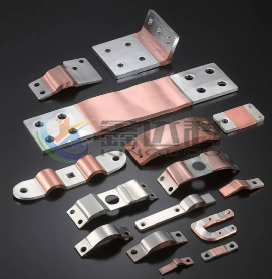
Copper and aluminum busbars are widely used in battery packs. Nowadays, the busbars are mostly made of multilayer copper foil/aluminum foil laminates as the base material, and are fabricated through a...
2026-08-05 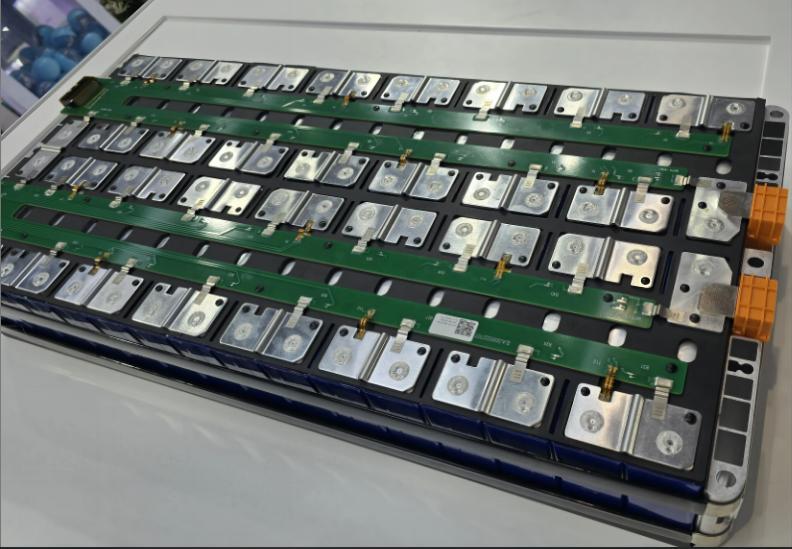
The CCS integrated busbar is mainly composed of signal acquisition components (such as FPC, PCB, FFC, etc.), plastic structural parts, nickel strips, copper busbars, aluminum busbars, etc. These are c...
2025-08-15 
Nickel is a metal with significant industrial value, with a melting point of 1453°C, a boiling point of 3075°C, and a specific gravity of 8.8 g/cm³. It has excellent corrosion resistance, is not easil...
2025-08-15 
Product Name: Power battery soft aluminum busbar, battery module welding flexible connector aluminum busbar, battery soft aluminum busbar Product Material: 1060 O-temper aluminum foil strip, aluminum ...
2023-05-04Phone:
0510-87183933