Jiangsu Xindake Connection Technology Co., Ltd. offers you free information and the latest news on battery connectors, battery pack inserts, e-bike battery nickel strips, nickel-plated strips and more. Stay tuned!


Jiangsu Xindake Connection Technology Co., Ltd.

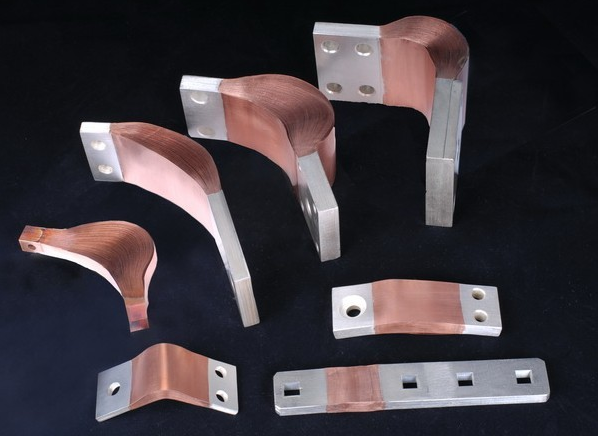
Basic knowledge of copper foil flexible connectors in the copper industry.

Source: http://www.kingdco.com/en/news/112.html   Published: 2017-12-29
Share:


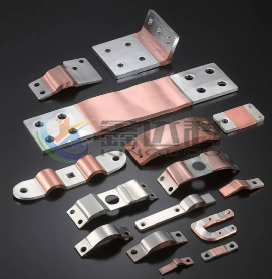
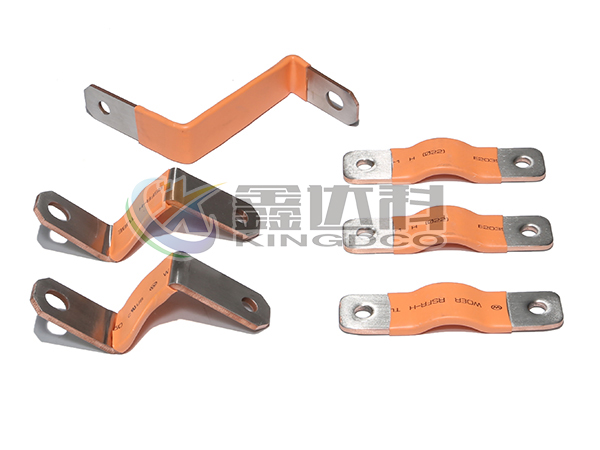
Copper foil flexible connectors

Copper foil flexible connectorCopper is one of the ancient metals discovered by humans very early. Humans began using copper over three thousand years ago. Copper has an atomic weight of 63.54, a density of 8.92, a melting point of 1083°C, and a boiling point of 2567°C. Pure copper is light rose or reddish in color, and after forming a copper oxide film on its surface, its appearance becomes reddish-brown. Copper has many valuable physical and chemical properties, such as high thermal and electrical conductivity, strong chemical stability, high tensile strength, ease of welding, corrosion resistance, plasticity, and ductility. Pure copper can be drawn into very fine wires and made into very thin copper foil. Copper can form alloys with metals such as zinc, tin, lead, manganese, cobalt, nickel, aluminum, and iron.
Copper is a typical chalcophile element, primarily forming sulfides in nature, and only forming oxides under strong oxidizing conditions, while natural copper forms under reducing conditions. Currently, about more than 250 copper minerals and copper-bearing minerals have been discovered in the Earth's crust, mainly including sulfides and similar compounds, copper oxides, native copper, as well as copper sulfates, carbonates, and silicates. Among them, 16 kinds are suitable as industrial mineral raw materials under current extraction and smelting conditions. These are: native element: native copper; copper sulfides: chalcopyrite, bornite, chalcocite, covellite, tetrahedrite, djurleite, enargite, tennantite; copper oxides: cuprite, tenorite; and copper sulfates, carbonates, and silicates: malachite, azurite, chrysocolla, brochantite, atacamite.
Currently, the copper mineral raw materials used for beneficiation in our country are mainly chalcopyrite, chalcocite, bornite, malachite, and others. According to metallurgical technical conditions, copper ores are divided into three natural types based on the ratio of copper oxide to copper sulfide. These are: sulfide ores, containing less than 10% copper oxide; oxide ores, containing more than 30% copper oxide; and mixed ores, containing 10%-30% copper oxide.
Copper mines are widely distributed in China. Apart from Tianjin, mineral deposits have been identified to varying degrees in all other provinces, autonomous regions, and municipalities. Among them, Jiangxi, Tibet, and Yunnan have exceptionally large reserves, with these three regions accounting for 47.1% of the copper reserves. Other provinces with relatively large copper reserves include Gansu, Anhui, Inner Mongolia, Shanxi, Hubei, and Heilongjiang; together, these six regions account for 32.3% of the copper reserves. The total reserves of the above nine regions account for 80% of the country's total copper reserves.
Copper minerals in China have the following characteristics: (1) Copper minerals suitable for beneficiation and smelting are found in various types of ore deposits. Among them, the types of deposits with significant mining value include magmatic copper-nickel sulfide deposits, porphyry copper deposits, skarn-type copper and polymetallic deposits, hydrothermal vein copper deposits, volcanic-sedimentary massive sulfide copper deposits, and sedimentary stratiform deposits. (2) Ore structures and textures are complex, with unevenly distributed grain sizes. Most ores are irregularly disseminated, and many minerals are finely disseminated with complex compositions, making beneficiation difficult. (3) The chemical composition of the ores is diverse, with numerous beneficial and harmful associated and coexisting elements, resulting in complex beneficiation and smelting conditions. Most developed mining areas are comprehensive copper deposits.
The development of copper smelting technology has gone through a long process, but to this day, copper smelting is still mainly done through pyrometallurgy, accounting for about 85% of total copper production. Pyrometallurgical copper smelting generally involves first obtaining copper concentrates from copper-containing ores through mineral processing, then smelting them into matte in sealed blast furnaces, reverberatory furnaces, electric furnaces, or flash furnaces. The produced matte (blister copper) is sent to a converting furnace to be blown into crude copper, then refined by oxidation in a reverberatory furnace to remove impurities, or cast into anode plates for electrolysis to obtain electrolytic copper with a purity as high as 99.9%. This process is short, highly adaptable, and achieves a copper recovery rate of up to 95%. However, because the sulfur in ores is released as sulfur dioxide waste gas during the matte-making and converting stages, it is difficult to recover and easily causes pollution. In recent years, smelting technologies such as the silver process, Noranda process, and Japan's Mitsubishi process have appeared, and pyrometallurgical smelting is gradually developing toward continuous and automated operations.
Wet smelting of copper includes methods such as sulfuric acid roasting-leaching-electrowinning, leaching-extraction-electrowinning, and bacterial leaching. It is suitable for heap leaching, tank leaching, or in-situ leaching of low-grade complex copper ores, oxidized copper ores, and copper-containing waste ores.
Copper is a non-ferrous metal that is very closely related to humans and is widely used in industries such as electricity, electronics, machinery manufacturing, construction, and national defense. The consumption of copper and its alloys is second only to steel and aluminum. Copper has extremely wide applications and huge usage in the electrical and electronics industries; generator coils, wires, and cables are all made of copper. Copper is used to manufacture various bullets, guns, and components such as heat exchangers for aircraft and ships. It is also used to make bearings, pistons, switches, valves, and high-pressure steam equipment. Other thermal technology, cooling devices, and civilian equipment also extensively use copper and copper alloys.
The above information was collected online by the editor. If you need to reprint it, please indicate the source. Thank you.
Previous: The working mechanisms of lithium batteries and lithium-ion batteries are different.
Next: Advantages of copper foil flexible connectors.

Phone:

0510-87183933

Leave a Message

Name:   
Phone:
Email:
Message:      
Submit