Jiangsu Xindake Connection Technology Co., Ltd. offers you free information and the latest news on battery connectors, battery pack inserts, e-bike battery nickel strips, nickel-plated strips and more. Stay tuned!
Jiangsu Xindake Connection Technology Co., Ltd. offers you free information and the latest news on battery connectors, battery pack inserts, e-bike battery nickel strips, nickel-plated strips and more. Stay tuned!


Cables played an important role in power transmission and distribution before the 1990s in low-voltage distribution systems. Over time, with the development of technology, by the 1990s, busbar trunking systems gradually had opportunities for introduction and development, and were quickly widely applied in construction projects. Wuxi busbar manufacturers share this with you!
Compared with traditional power transmission equipment, it has its unique performance advantages, such as high current-carrying capacity, strong overload ability, convenient tapping, good heat dissipation, and ease of maintenance.
1 Performance characteristics of ordinary busbars and cables:
The so-called ordinary busway refers to an electrical power distribution system in which several conductors are enclosed within a metal casing through a reasonable and safe structure, forming an integrated system with electrical continuity. Ordinary busways are generally divided into two types: solidly insulated and air-insulated. The air-insulated type has a simple structure and can carry a large current; the solidly insulated type has a compact structure and good heat dissipation. Both types are characterized by strong overload capacity, convenient tapping, and small space occupancy.
Cables are divided into single-core cables and multi-core cables. Single-core cables mainly use various insulating materials to cover multiple copper strands within the insulation layer, serving as a current conductor for one phase. Multi-core cables are formed by twisting multiple insulated cores together and covering them with an outer sheath to create a complete cable. The number of insulated cores in power cables is usually 1, 2, 3, 4, 5, etc., as well as 4+1 and 3+2 cores. The main advantages of cables are their flexible selection and strong adaptability to the environment, but they also have inherent limitations. Below is a performance comparison between bus ducts and cables from several main aspects.
a) Current carrying capacity:
The cross-sectional area of low-voltage cables is up to 1000mm², with a rated current of 1600A. Such large cables are rarely used in actual projects due to their volume and weight. In engineering, cables of 400 mm² and below are commonly used, which requires multiple cables to achieve simultaneous power supply. In contrast, the rated current of bus ducts can reach up to 6300A, and their powerful current-carrying capacity is something that cables simply cannot match.
b) Overload Capacity:
Whether it is a cable or a busway, the overload capacity depends on the operating temperature of the insulation material used. The operating temperature of busway insulation material is 105°C, and irradiated cross-linked flame-retardant tapes (PER) and radiation cross-linked polyolefin heat shrink tubes with an operating temperature above 140°C have now been developed. At present, the long-term operating temperatures of insulation materials used in cables are generally 90°C and 105°C, and the maximum operating temperature of irradiated cross-linked cables is 125°C. Therefore, the overload capacity of busways is far greater than that of cables.
c) Tap installation:
Busways generally use a plug-in type method for tapping. The so-called plug-in busway is a method of using a plug-in approach to tap the main power line to branch lines. A plug-in box opening is left every few meters, making tapping very convenient. In contrast, cables need to be tapped on-site, which is less reliable. Even prefabricated branch cables have their shortcomings. The obvious drawback of branch cables is that they require custom branch connectors from the factory, usually using open 'C'-shaped clamps. Over time, whether these clamps can maintain sufficient clamping force is also a concern. Additionally, the branch connectors of branch cables are fairly expensive, so prefabricated branch cables are still not widely used. When installing branch cables, the floor power must be cut off, but when installing busways, there is no need to cut off power; you just remove the busway's plug-in box under no-load conditions. However, cutting the branch power of prefabricated branch cables is very dangerous if done while powered.
d) Fire performance:
The insulation layer and outer sheath of ordinary cables will burn. Even flame-retardant cables will burn under flames, but they only continue to burn after the flame has passed. Fire-resistant cables do not burn, but they are expensive and are only used in situations where power cannot be interrupted, such as in fire alarm circuit systems. The casing of a busway is made of metal and will not burn; even if the insulation material of the copper bus bars catches fire, the flames will not threaten the outside of the busway.
e) Heat dissipation performance:
The insulation and outer sheath of the cable serve both as an insulating layer and a heat insulation layer. Therefore, in order to maintain the cable's heat dissipation, when the cable is laid in a cable tray, a maximum of two layers is allowed, mainly considering heat dissipation issues. On the other hand, bus ducts dissipate heat through air conduction, and by means of the steel outer casing in close contact, the heat is released, so their heat dissipation performance is much better than that of cables.
f) Operation and Maintenance:
The maintenance of bus ducts is relatively simple. During daily maintenance of bus ducts, it usually involves measuring the temperature rise of the casing and through-core bolts, as well as the temperature rise of the junctions in the incoming box. If the through-core bolts are of grade 4.8, they need to be regularly tightened, whereas high-strength bolts of grade 8.8 do not require regular tightening. On the other hand, due to factors such as the cable material being prone to wear, aging, and having a shorter lifespan, it needs to be inspected and maintained regularly, and sometimes even replaced.
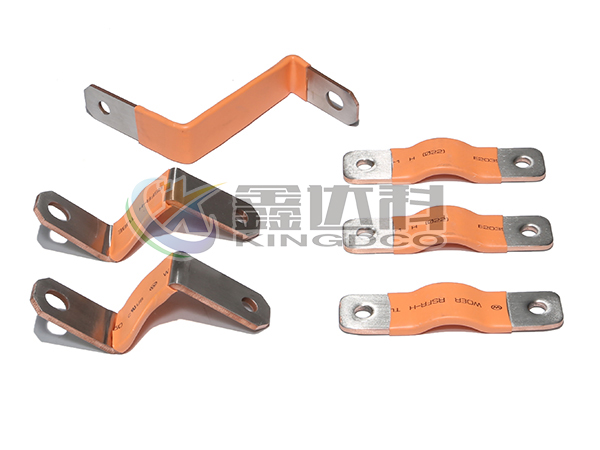
If you want copper busbars, then it would be Yixing Xindake New Energy Technology Co., Ltd. Our company specializes in copper foil flexible connectors, copper busbar manufacturing, stamping part processing prices, and more. Thank you for your browsing and support!
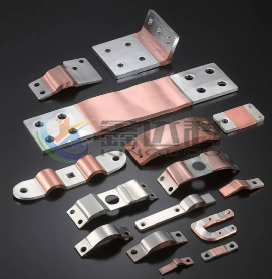
Copper and aluminum busbars are widely used in battery packs. Nowadays, the busbars are mostly made of multilayer copper foil/aluminum foil laminates as the base material, and are fabricated through a...
2026-08-05 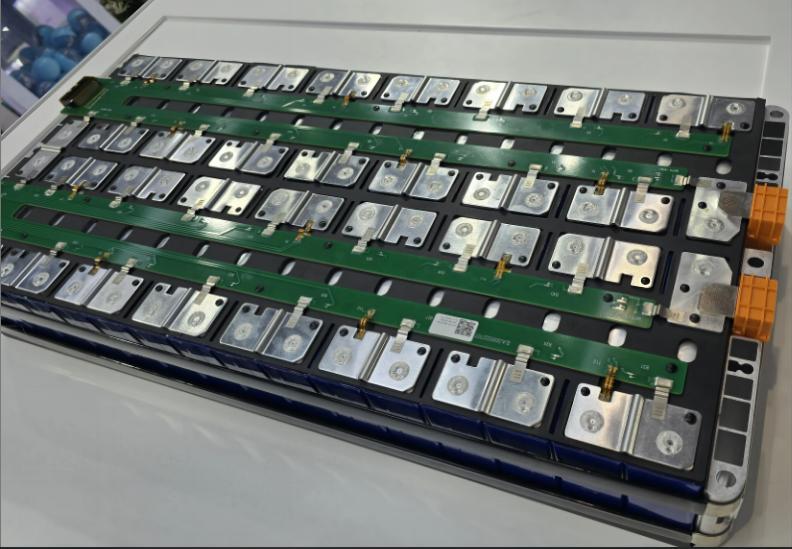
The CCS integrated busbar is mainly composed of signal acquisition components (such as FPC, PCB, FFC, etc.), plastic structural parts, nickel strips, copper busbars, aluminum busbars, etc. These are c...
2025-08-15 
Nickel is a metal with significant industrial value, with a melting point of 1453°C, a boiling point of 3075°C, and a specific gravity of 8.8 g/cm³. It has excellent corrosion resistance, is not easil...
2025-08-15 
Product Name: Power battery soft aluminum busbar, battery module welding flexible connector aluminum busbar, battery soft aluminum busbar Product Material: 1060 O-temper aluminum foil strip, aluminum ...
2023-05-04Phone:
0510-87183933