Jiangsu Xindake Connection Technology Co., Ltd. offers you free information and the latest news on battery connectors, battery pack inserts, e-bike battery nickel strips, nickel-plated strips and more. Stay tuned!
Jiangsu Xindake Connection Technology Co., Ltd. offers you free information and the latest news on battery connectors, battery pack inserts, e-bike battery nickel strips, nickel-plated strips and more. Stay tuned!


There are many cases of lithium battery explosions. For example, last year's widely publicized Samsung Galaxy Note7 explosion incident revealed that the currently very common lithium-ion batteries may not be ideal power sources for future smartphones. You may not be very clear about the reasons for lithium battery explosions, so the following content is Yixing Xindake's analysis of lithium battery explosions for you!
The types of battery cell explosions can be summarized as external short circuit, internal short circuit, and overcharging. Here, 'external' refers to the exterior of the cell, including short circuits caused by poor insulation design within the battery pack. When an external short circuit occurs and the electronic components fail to break the circuit, high heat is generated inside the cell, causing part of the electrolyte to vaporize and the battery casing to expand. When the internal temperature of the battery reaches 135 degrees Celsius, a high-quality separator will close its micropores, halting or nearly halting the electrochemical reaction, causing the current to drop sharply and the temperature to gradually decrease, thereby preventing an explosion. However, if the micropore closure rate is too low, or if the separator's micropores do not close at all, the battery temperature will continue to rise, more electrolyte will vaporize, and eventually the battery casing may burst, or the battery temperature may increase to the point of causing the material to ignite and explode.
Internal short circuits are mainly caused by burrs on copper and aluminum foils piercing the separator, or by dendritic lithium crystals piercing the separator. These tiny needle-like metals can cause micro-short circuits. Since the needles are very fine and have some resistance, the current may not necessarily be very high. Burrs on copper and aluminum foils occur during the production process, and the observable phenomenon is that the battery leaks electricity too quickly, which can mostly be detected by cell manufacturers or assembly plants. Moreover, since the burrs are small, they may sometimes burn out, allowing the battery to return to normal. Therefore, the likelihood of an explosion caused by a micro-short circuit due to burrs is low. This claim is statistically supported by the fact that many cell manufacturers commonly encounter defective batteries that show low voltage shortly after charging, yet rarely experience explosion incidents.
Therefore, explosions caused by internal short circuits are mainly due to overcharging. When overcharged, needle-like lithium metal crystals form all over the electrode plates, puncturing points appear everywhere, and micro-short circuits occur throughout. As a result, the battery temperature gradually rises, eventually causing the electrolyte to gas off due to high heat. In this situation, whether the high temperature causes materials to burn and explode, or the casing is first ruptured, allowing air in to react violently with the lithium metal, the outcome is an explosion. However, explosions caused by internal short circuits due to overcharging do not necessarily occur during charging. It is possible that the battery temperature has not yet reached the point where materials burn, and the gas produced is not enough to rupture the battery casing, but the consumer ends charging and takes the phone out.
At this time, the heat generated by numerous micro short circuits slowly raises the battery temperature, and after a period of time, an explosion occurs. Consumers commonly describe picking up their phones and finding them very hot, and then the phone explodes after being thrown. Based on the types of explosions described above, we can focus on preventing overcharging, preventing external short circuits, and improving cell safety. Among these, preventing overcharging and external short circuits are electronic protections, which are largely related to battery system design and battery assembly. The focus of improving cell safety is chemical and mechanical protection, which is largely related to the battery cell manufacturer.
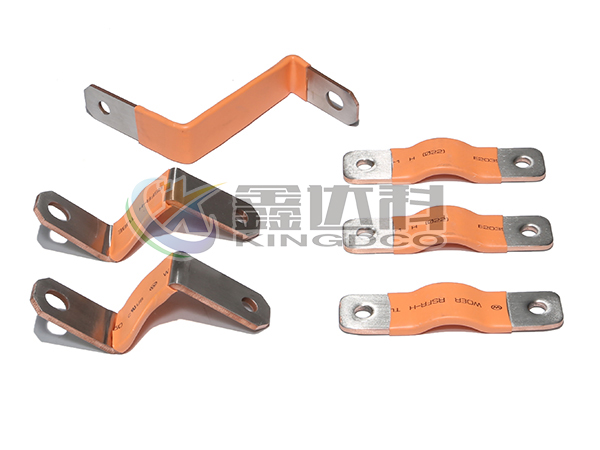
If you want copper foil flexible connectors, then it is Yixing Xindake New Energy Technology Co., Ltd. Our company specializes in copper foil flexible connectors, copper busbar manufacturing, and stamping parts processing prices. Thank you for your browsing and support!
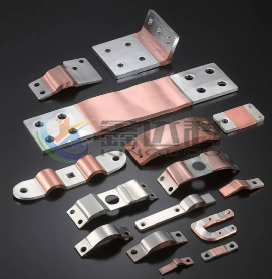
Copper and aluminum busbars are widely used in battery packs. Nowadays, the busbars are mostly made of multilayer copper foil/aluminum foil laminates as the base material, and are fabricated through a...
2026-08-05 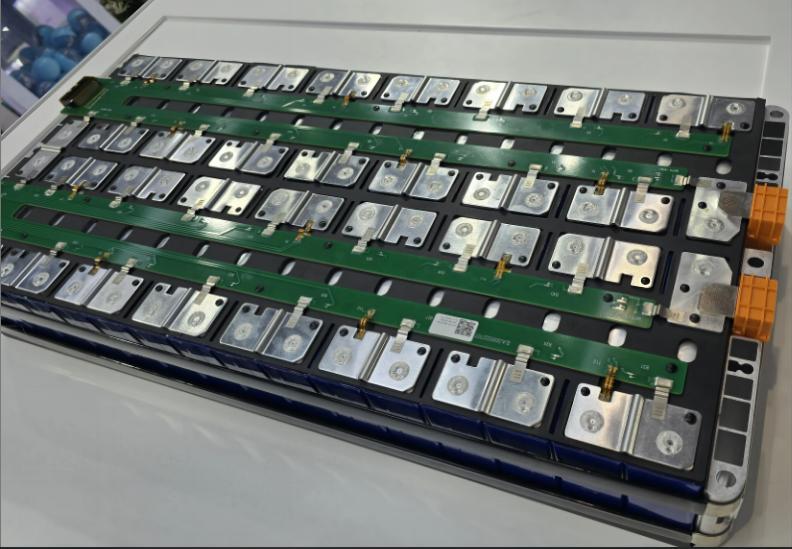
The CCS integrated busbar is mainly composed of signal acquisition components (such as FPC, PCB, FFC, etc.), plastic structural parts, nickel strips, copper busbars, aluminum busbars, etc. These are c...
2025-08-15 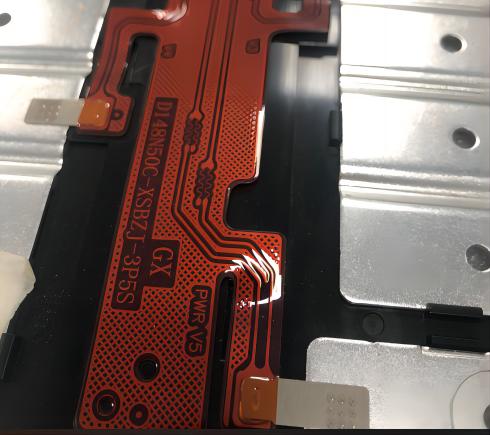
Nickel is a metal with significant industrial value, with a melting point of 1453°C, a boiling point of 3075°C, and a specific gravity of 8.8 g/cm³. It has excellent corrosion resistance, is not easil...
2025-08-15 
Product Name: Power battery soft aluminum busbar, battery module welding flexible connector aluminum busbar, battery soft aluminum busbar Product Material: 1060 O-temper aluminum foil strip, aluminum ...
2023-05-04Phone:
0510-87183933