Jiangsu Xindake Connection Technology Co., Ltd. offers you free information and the latest news on battery connectors, battery pack inserts, e-bike battery nickel strips, nickel-plated strips and more. Stay tuned!
Jiangsu Xindake Connection Technology Co., Ltd. offers you free information and the latest news on battery connectors, battery pack inserts, e-bike battery nickel strips, nickel-plated strips and more. Stay tuned!


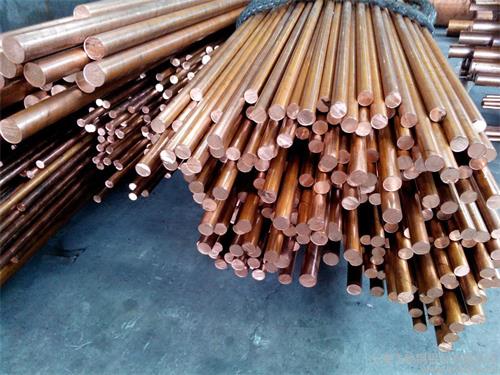
There are three types of surface treatment processes for copper busbars, namely copper busbar painting, copper busbar tin plating, and copper busbar coating with protective agents. Due to the relatively large number of these three surface treatments, thereforeSo, today the busbar manufacturers only talk about one type, which is tin-plated busbars! What kind of process is tin-plating for busbars?
1. The process is mature. The operation cycle is short and commonly used.
2. Weakness: Over time, the surface darkens, making it impossible for manual labor to do. Not environmentally friendly!
3. Process Flow
Pretreatment such as surface polishing and degreasing→ pure water washing→ plating of high Pb-Sn alloys, tap water washing→ pure water washing→ tin plating→ tap water spraying→ neutralization(Na2HPO4 Na3PO4) → tap water spray wash→ soaked in stearic acid→ tap water spray wash→ hot purified water soaking → drying.
4. Surface polishing of copper busbars: Both manual and mechanical processes are slow and tiring, with heavy dust accumulation. Cleaning surface oxide scales and tiny burrs is required.
(Use quartz sand and glass pellets.)
5. Functions and process flow of each plating solution component
6. The main components of bright sulfate tin plating solution are stannous sulfate and sulfuric acid, and their content varies depending on the additives used in production.
1. Stannous sulfate is the main salt, with a concentration generally controlled at 40–100 g/L. However, production experiments have shown that although high concentrations of stannous sulfate can improve the cathodeCurrent density accelerates deposition, but significantly reduces the dispersion ability of the plating solution and reduces the coarse, bright areas of the coating crystallization, even greatly shortening themTreatment cycle of the plating solution.
2. It is advisable to control the SnSO4 content at 20–60 g/L. If the lower limit is chosen, it can be achieved by increasing the circulation speed of the plating solution and the movement speed of the electrodes (cathode or anode), etc.Methods for "compensation" can still produce high-quality products, but the price should not be too low.
7. Sulfuric acid has the effects of reducing the activity of stannous ions, preventing their hydrolysis, and improving the conductivity of the plating solution as well as the anode current efficiency. When the amount of sulfuric acid is insufficient, Tin(II) ions are easily oxidized to tetravalent tin.
8. From a kinetic perspective, when there is enough H2SO4, the hydrolysis of divalent tin can be slowed down, stabilizing the plating solution and the actual production H2SO4 contentGenerally at 80~150mL/L.
9. Additives
1. Tin plating brighteners are generally made by blending main brightener, auxiliary brightener, and carrier brightener.
2. Main brightener
3. There are many types of acidic bright tin plating brighteners, which can be summarized into two main categories: The first category mainly includes aromatic aldehydes, aromatic ketones, esters, and unsaturated organics.Derivatives of acid alnes, the second category mainly consists of Sefer alkaloids (basic structural units are -CH=N—CH=CH- or -CH=CH-CH=N-), composed of acetaldehyde and ortho-methyl-acrylIt is an effective brightener for acidic brightness tin plating, can be used alone or in combination with Class 1 brighteners, and when combined with Class 1 brightenersWhen used together, it can significantly expand the bright area and effectively eliminate white fog on the coating.
4. The brightening effect of organic brighteners mainly manifests in their adsorption on the cathode. If the adsorption on the cathode is too strong or too weak, an ideal bright plating cannot be obtained.Layer. Because adsorption is too strong and the desorption potential is too negative, severe hydrogen evolution easily leads to pinholes; When adsorption is too weak, the desorption potential is relatively positive, causing the coating to crystallizeRough. Only proper adsorption can achieve a good glossy effect.
5. Therefore, when preparing combined brighteners, additives that are too strong or too weak should be organically used together to achieve moderate adsorptionThe purpose is to have a wide range of attached potentials, and the quantities of each combination are determined experimentally. Currently, the main brighteners can be used as benzyl acetone, kumingal, and dibenzylketones, O-chlorobenzaldehyde, among which benzyl acetone is commonly used.
6. Auxiliary Brightening Agent
7. Because the main brightener can only function within a certain current density range, it cannot achieve an ideal coating when used alone, but ifWhen combined with auxiliary brighteners, a synergistic effect can be achieved, thereby further refining the coating crystallization and expanding the brightness current density area. It belongs toThese additives are fatty aldehydes and some organic acids, commonly used ones include formaldehyde, acrylic acid, cinnamic acid, etc.
8. Carrier Brightener
9. Most organic brighteners have very low solubility in water, so they absorb a small amount on the cathode, so they are not suitable for adding plating solutions alone; YesSome organic brighteners tend to precipitate from the plating solution during electroplating due to oxidation, polymerization, and other reactions. Therefore, if you want to maintain the effect of the brightener...To fully utilize these surfactants, it is necessary to add some surfactants to increase the content of brighteners in the plating solution using their solubilizing effect. These surface reactive agents are also requiredThe agent is called a carrier brightener, also known as a dispersant. It also has functions such as wetting and refining crystallization.
10. The earliest carrier brighteners used were some anionic surfactants, but their adsorption on the cathode was relatively weak. Later, nonionic types were developedtypes of surfactants, such as polyethylene oxide and polyoxypropylene ether, which not only wet and disperse but also inhibit H2 precipitation and Sn2 dischargeIt helps refine the grains of the coating. Among the dispersants mentioned above, OP emulsifiers are widely used.
10. Stabilizer
1. Acidic tin plating solutions mainly composed of stannous sulfate salts will become cloudy after continuous operation for half a month, making it difficult to produce qualified products, so a certain stabilizer must be added.
2. Common acidic tin plating stabilizers are mostly complexing agents of Sn²⁺, such as oxalic acid, citric acid, tartaric acid, etc., and using a combination works better than using them individually.
Additionally, certain catalysts also stabilize the plating solution. Production shows that under continuous production, plating solutions with this catalyst can be maintainedFor more than half a year, it remains clear and unclouded.
11. Flocculants
1. So far, there is no stabilizer that can maintain the plating solution stable and clear over the long term, so Sn4 is inevitably produced. As Sn4 accumulates,The plating solution gradually becomes turbid, sediment increases, the bright areas of the coating decrease, uniformity worsens, and even darkening or spotting occurs. At this point, the plating solution must beCarry out flocculant treatment.
2. Flocculants are divided into inorganic and organic types. Inorganic flocculants include various salts, activated silica, etc. Organic flocculants can be categorized as anionic, cationic,Nonionic types: 3 types. Anionic flocculants mainly include epoxyamine copolymers, polyvinyl-imide, polyvinyl amine derivatives, and anionic flocculantsThe main types include polyacrylamide hydrolysate, polyacrylamide, and sodium sulfonate. Nonionic flocculants mainly include polyacrylamide and urea-formaldehyde polymersetc.
3. The combined use of polyacrylamide and inorganic flocculants is very effective; it does not affect the performance of the plating solution at all, but the settling speed is too slow, taking up to 48 hours...above. Epoxide amine copolymers are quite effective, but excessive use can affect the plating solution to some extent, and in severe cases may impact the gloss of the coating, but the settling rate is notably highDon't rush; generally, it can fully settle within 2 hours (avoid excessive use when using).
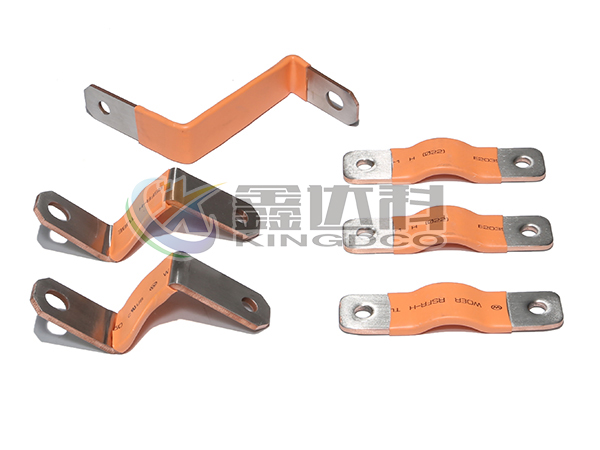
If you want copper busbars, then it has to be Yixing Xindake New Energy Technology Co., Ltd. Our company specializes in copper foil flexible connectors, copper busbar manufacturing, and stamping parts.Processing prices, etc. Thank you for your browsing and support!
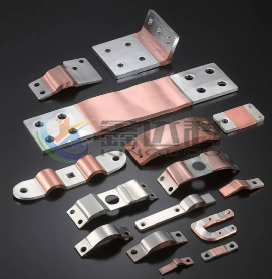
Copper and aluminum busbars are widely used in battery packs. Nowadays, the busbars are mostly made of multilayer copper foil/aluminum foil laminates as the base material, and are fabricated through a...
2026-08-05 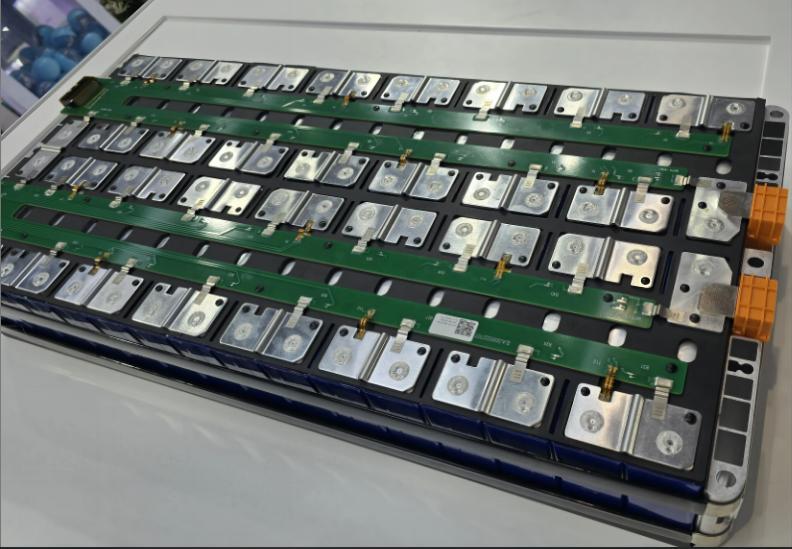
The CCS integrated busbar is mainly composed of signal acquisition components (such as FPC, PCB, FFC, etc.), plastic structural parts, nickel strips, copper busbars, aluminum busbars, etc. These are c...
2025-08-15 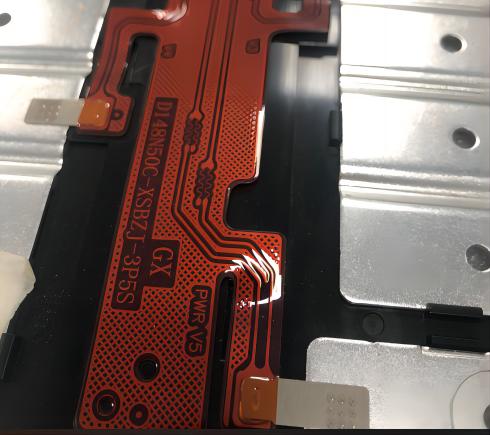
Nickel is a metal with significant industrial value, with a melting point of 1453°C, a boiling point of 3075°C, and a specific gravity of 8.8 g/cm³. It has excellent corrosion resistance, is not easil...
2025-08-15 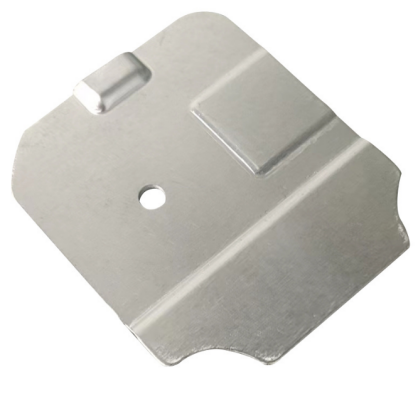
Product Name: Power battery soft aluminum busbar, battery module welding flexible connector aluminum busbar, battery soft aluminum busbar Product Material: 1060 O-temper aluminum foil strip, aluminum ...
2023-05-04Phone:
0510-87183933