Jiangsu Xindake Connection Technology Co., Ltd. offers you free information and the latest news on battery connectors, battery pack inserts, e-bike battery nickel strips, nickel-plated strips and more. Stay tuned!
Jiangsu Xindake Connection Technology Co., Ltd. offers you free information and the latest news on battery connectors, battery pack inserts, e-bike battery nickel strips, nickel-plated strips and more. Stay tuned!


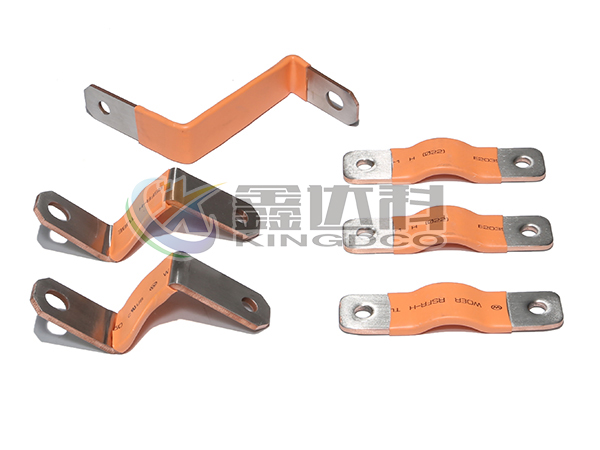
The main products promoted by our company are not only copper foil flexible connectors and copper busbars, but also those that we have not introduced much.Automobile Battery Copper Busbar, what kind of copper busbar is this? The copper busbars used in electric vehicle battery boxes and by manufacturers are different from the power electronics laminated busbars used in industry (commonly referred to as hard copper busbars). Currently, the copper busbars for new energy vehicle batteries are generally flexible in structure, which can more effectively counteract the vibration-induced effects and damage to the battery cell electrodes during vehicle operation. Laminated copper busbars, as an efficient and highly reliable interconnection solution for the relays and fuses at various levels in distribution boxes, are also widely used in the high-voltage distribution boxes of electric vehicles.
The processing technology of copper busbars for electric vehicle battery boxes: copper busbars are basically used in primary circuits (high-current phase lines, neutral lines, and grounding lines can all use copper busbars). Then, the connection of high-current primary components on the electrical cabinet also uses copper busbars. For example, in a row of electrical cabinets, the connection between cabinets is the main busbar, and the branch busbars distributed to each cabinet’s switchgear (isolating switches, circuit breakers, etc.) are connected from the main busbar.
No matter which acidic stripping black film method is used, there are four major issues: 1. The surface after film removal is very simple and quickly turns red again (or becomes colorful), making subsequent plating difficult; 2. Acid solutions pollute the environment and need to be treated as wastewater before discharge; 3. For most copper alloys, parts become rough after acid treatment; for example, brass (copper-zinc alloy) will experience dezincification corrosion after acid treatment, leaving red copper powder on the surface, making subsequent plating impossible.
However, in the atmospheric environment (especially in humid or maritime environments), copper and its alloys easily oxidize and turn black or develop green rust, significantly reducing the conductivity of electrical connection contact surfaces. To prevent the oxidation of copper or to improve the surface conductivity of copper conductors (such as copper busbars), it is common to use surface plating technologies such as silver plating, tin plating (tinned), nickel plating (such as matte nickel), and gold plating (for circuit board pins) to carry out surface conductivity modifications on copper.
1. Painting of copper busbars: This process is considered an outdated and obsolete technique and is rarely used nowadays. Process: All three-phase AC circuit busbars are coated with black paint, and color labels are affixed in conspicuous places. Phase A is yellow, Phase B is green, Phase C is red, the neutral or zero line is painted light blue, and the protective grounding wire is painted in alternating yellow and green to prevent easy polarity identification. The phase sequence is marked with white paint. 3) For high loads, on the basis of permissible current carrying capacity and voltage drop compliance, the economic current density is chosen, which then requires considering power loss; power loss and capital investment need to be within a reasonable range. Allowable current carrying capacity of a conductor? The current density permitted for long-term continuous operation of a conductor is called allowable current carrying capacity. The general standards are: for t2 copper busbars, select 5–8 A/mm²; for aluminum wires, select 3–5 A/mm².
The above content is compiled for you by the editor of Wuxi Xinda Ke. We remind you that special attention is also needed in the processing of copper busbars. The movement of copper busbars should be carried out one piece at a time. If stacking is necessary, isolation measures (such as using air cushion film or felt) should be taken to ensure the surface of the busbar is smooth and flat. Handle with care and place gently. The contact surface for storing copper busbars is best like a wooden or rubber shelf. When handling copper busbars, clean gloves should be worn to prevent sweat from causing corrosion on the surface of the busbars.
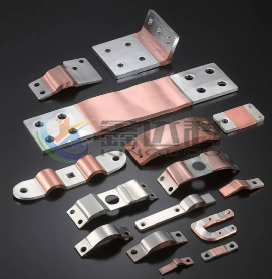
Copper and aluminum busbars are widely used in battery packs. Nowadays, the busbars are mostly made of multilayer copper foil/aluminum foil laminates as the base material, and are fabricated through a...
2026-08-05 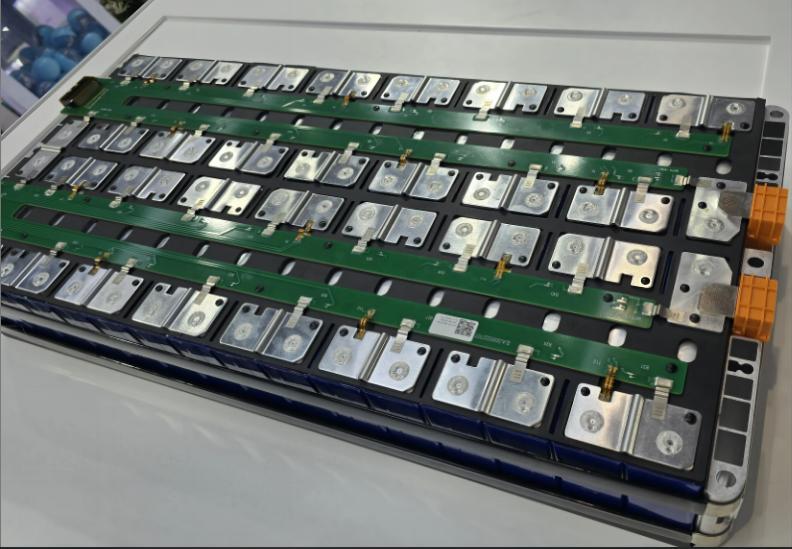
The CCS integrated busbar is mainly composed of signal acquisition components (such as FPC, PCB, FFC, etc.), plastic structural parts, nickel strips, copper busbars, aluminum busbars, etc. These are c...
2025-08-15 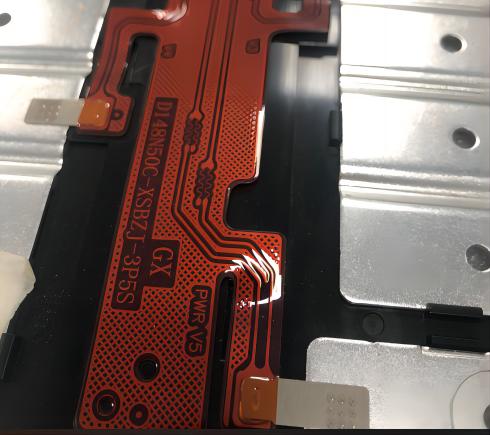
Nickel is a metal with significant industrial value, with a melting point of 1453°C, a boiling point of 3075°C, and a specific gravity of 8.8 g/cm³. It has excellent corrosion resistance, is not easil...
2025-08-15 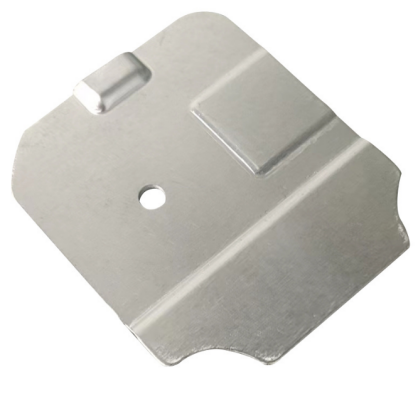
Product Name: Power battery soft aluminum busbar, battery module welding flexible connector aluminum busbar, battery soft aluminum busbar Product Material: 1060 O-temper aluminum foil strip, aluminum ...
2023-05-04Phone:
0510-87183933