Jiangsu Xindake Connection Technology Co., Ltd. offers you free information and the latest news on battery connectors, battery pack inserts, e-bike battery nickel strips, nickel-plated strips and more. Stay tuned!
Jiangsu Xindake Connection Technology Co., Ltd. offers you free information and the latest news on battery connectors, battery pack inserts, e-bike battery nickel strips, nickel-plated strips and more. Stay tuned!


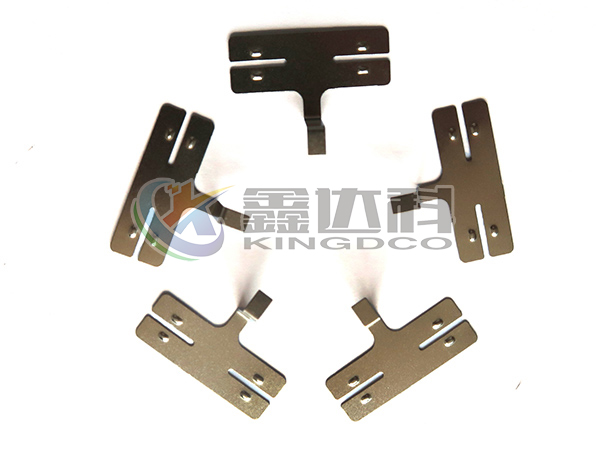
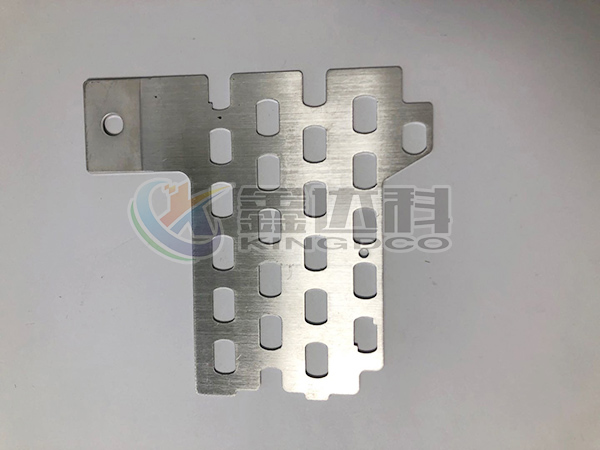
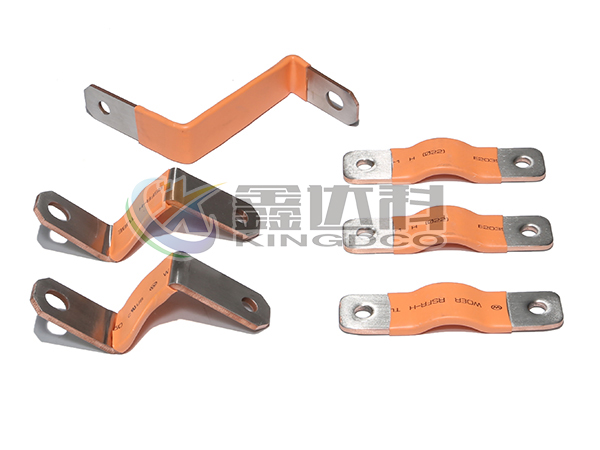
The production of stamped parts affects the production cost because of its precise accuracy, and the production cost is directly related to the market price of stamped parts. You may be aware of the market price of stamped parts, but do you understand the production mode of stamped parts? Perhaps you have only heard that the production accuracy of stamped parts is very strict, but the exact level of strictness and precision is probably something you do not know.
Processing mode of stamped parts: In actual production, process tests that approximate the stamping process are commonly used, such as deep drawing performance tests and bulging performance tests to check the stamping performance of materials, in order to ensure product quality and a high pass rate.
The accuracy and structure of the mold directly affect the forming and precision of stamped parts. The cost and lifespan of the mold are important factors that influence the cost and quality of stamped parts. Mold design and manufacturing require a considerable amount of time, which extends the production preparation time for new stamped parts.
Standardization of mold bases, mold frames, and guiding components, as well as the development of simple molds (for small batch production), compound molds, and multi-station progressive molds (for mass production), along with the development of quick mold change devices, can reduce the amount of preparation work and shorten the preparation time for stamping production, making it possible to reasonably apply advanced stamping technologies suitable for mass production to small batch, multi-variety production.
Except for thick plates formed by hydraulic presses, stamping equipment generally uses mechanical presses. Centered on modern high-speed multi-station mechanical presses, it is equipped with uncoilers, leveling machines, finished product collection, conveyors, as well as die storage and quick die change devices, and controlled by computer programs, it can form a high-productivity automatic stamping production line.
In the case of producing dozens or hundreds of stamped parts per minute, completing processes such as feeding, stamping, part removal, and waste disposal in a short period of time often leads to personal, equipment, and quality accidents. Therefore, safety production in stamping is a very important issue.
Cold-stamped parts generally do not undergo further cutting processing, or only require a small amount of cutting. Hot-stamped parts have lower precision and surface condition than cold-stamped parts, but are still better than castings and forgings, with minimal cutting required.
Stamping is an efficient production method. Using compound dies, especially multi-station progressive dies, multiple stamping processes can be completed on a single press, achieving fully automatic production from strip feeding and leveling, blanking, to forming and finishing. It has high production efficiency, good working conditions, and low production costs, generally producing hundreds of pieces per minute.
Stamping is mainly classified according to the process and can be divided into two categories: separating processes and forming processes. The separating process, also called blanking, aims to separate the stamped part from the sheet along a certain contour line while ensuring the quality requirements of the separation surface. The purpose of the forming process is to cause plastic deformation of the sheet under the condition that the blank is not broken, so as to make a workpiece with the required shape and size. In actual production, multiple processes are often integrated into one workpiece. Blanking, bending, shearing, deep drawing, bulging, spinning, and straightening are some of the main stamping processes.
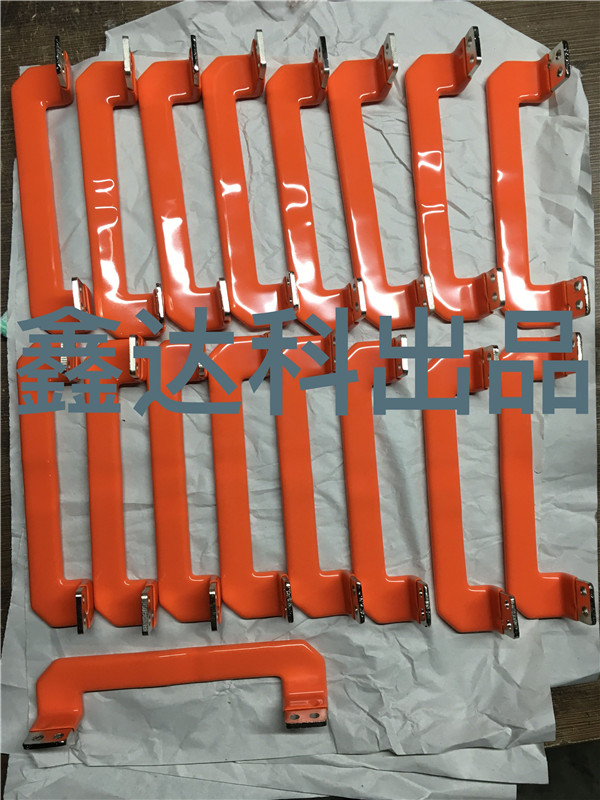
The surface and internal properties of stamping sheet metal have a significant impact on the quality of stamped products. The stamping material is required to have precise and uniform thickness; a smooth surface without spots, scars, scratches, or surface cracks; uniform yield strength without obvious directional characteristics; high uniform elongation; low strength-to-yield ratio; and low work-hardening ability.
A forming process in which external force is applied to sheet metal, strip, tube, and profile materials through a punch press and die to cause plastic deformation or separation, thereby obtaining workpieces of the required shape and size; the resulting workpieces are called stamped parts.
Stamping is a forming process in which a press and mold apply external force to sheet metal, strip, pipe, and profile materials, causing plastic deformation or separation to obtain workpieces (stamped parts) with the desired shape and size. Stamping and forging both belong to plastic processing (also called pressure processing), collectively referred to as forging and stamping. The raw materials for stamping are mainly hot-rolled and
Cold-rolled steel sheets and steel strips.
Each production process of stamped parts is equally important. The fact that a large number of stamped parts are produced does not mean they can go through an assembly line; they cannot. Therefore, the production process of stamped parts should not be careless because of large quantities, and similarly, their price will not be cheaper because of the large quantity.
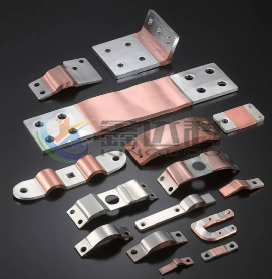
Copper and aluminum busbars are widely used in battery packs. Nowadays, the busbars are mostly made of multilayer copper foil/aluminum foil laminates as the base material, and are fabricated through a...
2026-08-05 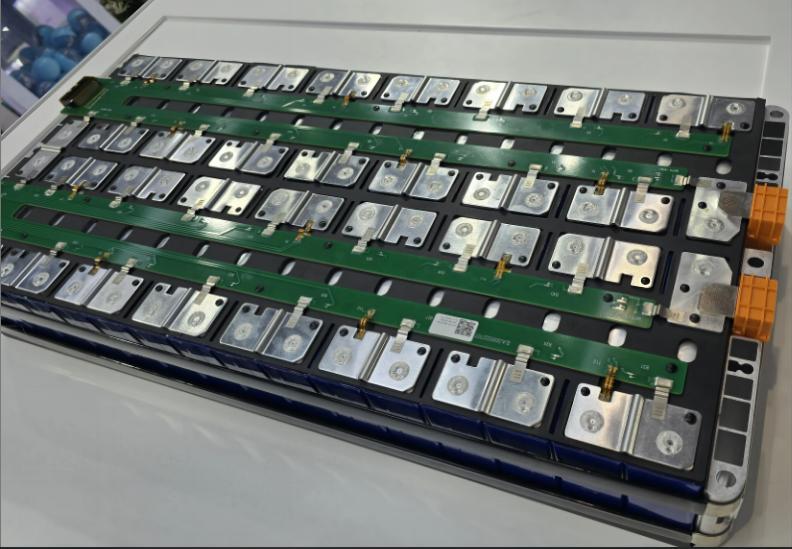
The CCS integrated busbar is mainly composed of signal acquisition components (such as FPC, PCB, FFC, etc.), plastic structural parts, nickel strips, copper busbars, aluminum busbars, etc. These are c...
2025-08-15 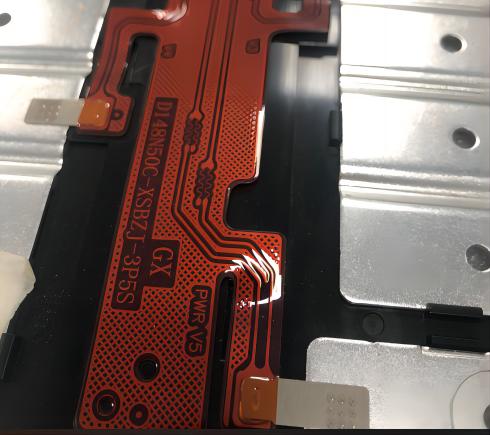
Nickel is a metal with significant industrial value, with a melting point of 1453°C, a boiling point of 3075°C, and a specific gravity of 8.8 g/cm³. It has excellent corrosion resistance, is not easil...
2025-08-15 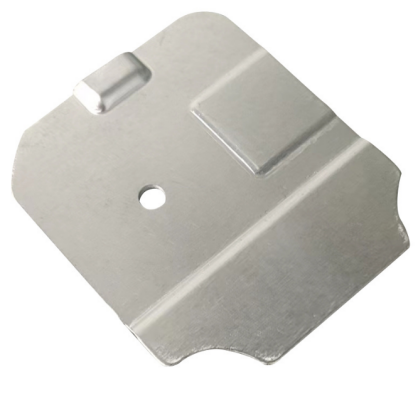
Product Name: Power battery soft aluminum busbar, battery module welding flexible connector aluminum busbar, battery soft aluminum busbar Product Material: 1060 O-temper aluminum foil strip, aluminum ...
2023-05-04Phone:
0510-87183933