Jiangsu Xindake Connection Technology Co., Ltd. offers you free information and the latest news on battery connectors, battery pack inserts, e-bike battery nickel strips, nickel-plated strips and more. Stay tuned!
Jiangsu Xindake Connection Technology Co., Ltd. offers you free information and the latest news on battery connectors, battery pack inserts, e-bike battery nickel strips, nickel-plated strips and more. Stay tuned!


WuxiCopper bus manufacturerTo explain some content about new energy to you, everyone knows that the world is paying more and more attention to the issue of new energy. Whoever's products can adopt new energy first will be able to occupy the market in a very short time, because I am also continuously researching and developing new energy, and this is not only in China but all over the world.
Recently, the new energy vehicle sector has been continuously disrupted by cross-industry entrants. Earlier, big players like LeEco and Gree made high-profile entries, followed by telecommunications and electronics giants such as ZTE and Changhong. Now, real estate developer Zhonghe Real Estate has forcefully entered the market with 10 billion yuan in capital. Even investments in new energy vehicles by eight major tycoons, including Jack Ma and Robin Li, have been thoroughly exposed. A 'cross-industry storm' is sweeping through the new energy vehicle field.
1. Does Zhonghe Real Estate also want to get involved in new energy vehicles?
On April 28, Zhonghe Real Estate Co., Ltd. signed a contract with the Xianning Municipal Government of Hubei Province. Zhonghe Real Estate will build the Zhonghe New Energy Vehicle (Central China) Production Base in Xianning High-tech Zone. The total investment of the project is 10 billion yuan. Construction will begin within the year, and it will be built in two phases, completed in three years. The plan is to produce 200,000 micro electric vehicles and 100,000 high-speed electric vehicles annually, with an estimated annual output value of 50 billion yuan.
Information shows that Zhonghe Real Estate is a subsidiary of China Co-Op Group. Since last year, Zhonghe Real Estate has entered the new energy vehicle industry, planning to build four major production bases in Northeast China, North China, Central China, and Southwest China, with the Central China base located in Xianning. According to reports, the Xianning base is designed to produce 1,000 cars per day. Its micro electric vehicles are mainly aimed at the rural market and for export to ASEAN countries; the high-speed electric vehicles are positioned as high-end, mainly to meet domestic demand.
2. Is Changhong making a big move in the crossover from home appliances to new energy?
Recently, Changhong and Sichuan Development have teamed up again, intending to enter the new energy battery sector, becoming another home appliance giant venturing into new energy batteries after Gree. According to the relevant strategic cooperation details, Sichuan Development plans to assist Changhong Holdings Company in focusing on new energy, high-speed rail, and new energy vehicles, with the goal of developing military-civilian integrated products, primarily represented by lithium-ion batteries.
In addition, Changhong will also venture into fields such as compound semiconductor chips. Previously, Changhong announced a high-profile overall intelligent strategy transformation and released a new industrial map: beyond its main businesses of home appliances, military industry, and IT distribution, it aims to create five major industrial layouts in new areas such as mobile and finance. Now, by crossing over from home appliances to the new energy sector, is Changhong playing a major new game?
3. Can the ideal expectations for Zhongxing New Energy Vehicles’ production this year become reality?
On April 13, ZTE disclosed an important plan stating that new energy vehicles will be put into production in 2017, with an expected annual output of 30,000 units, and autonomous driving will also be introduced in electric buses. ZTE entered Zhuhai in 2016, announcing an investment of 10 billion to build a new energy vehicle factory in Zhuhai, with the project managed by Tian Wenguo, Executive Vice President of ZTE Corporation.
At present, ZTE has already used its existing factories to produce more than 200 pure electric buses. The manufactured pure electric buses are equipped with 4G vehicle networking modules, and all associated operational data of the buses, as well as the parameters of each battery cell, can be monitored remotely in real time.
4. The transformation story of the security giant into new energy is somewhat unusual!
On March 17, another new car-making force entered the new energy vehicle industry, but this time the story is somewhat unusual. Unlike traditional car companies and internet car makers, and unlike overseas mergers and acquisitions of vehicle technology and assets by companies like Wanxiang and Guoneng New Energy, this time entering the new energy vehicle industry is a giant in the security industry – Zhejiang Dahua Company.
The first mass-produced car comes standard with 9 cameras, offers performance comparable to Tesla, and is priced around 150,000 yuan as a national sedan coupe. Zhu Jiangming, the chairman of Leapmotor and a former R&D engineer, stated that 'Leapmotor is Dahua Company's second venture.' Leapmotor's manufacturing base is located in Jinhua New Energy Vehicle Town, covering an area of about 551 mu, with an investment of 2.5 billion yuan. Construction of the production base will begin in April this year and is expected to be completed and put into use by mid-2018. The first phase of the production base plans an annual output of 50,000 vehicles.
5. Qunxing Toys launches dual businesses of "Toys + New Energy"
On April 1, Qunxing Toys announced that the company plans to acquire 100% equity of Zhejiang Shikong Energy Technology Co., Ltd. for 2.9 billion yuan, officially launching the dual main businesses of 'Toys and New Energy.' At the same time, Qunxing Toys also plans to raise supporting funds of no more than 1 billion yuan for the construction of battery packs and research and development center projects.
6. Do you approve of the 'Dong Mingzhu model' in the new energy vehicle industry?
At the end of 2016, Gree Electric Appliances Chairman and President Dong Mingzhu, with an imposing presence, achieved her goal of entering the new energy vehicle sector in an unexpected way; on March 3, 2017, Dong Mingzhu, during an exclusive interview with a China National Radio reporter, stated that Gree's new energy vehicles cannot be entirely profit-oriented.
On May 9, 2017, Dong Mingzhu attended the groundbreaking ceremony of the Zhuhai Yinlong Lanzhou Guangtong New Energy Vehicle Production Base held in Lanzhou New Area; after returning to her hometown Nanjing, Dong Mingzhu stated that Yinlong New Energy will take Nanjing as an important base in East China, enhancing its influence on national and global markets, attracting more industries to settle in Nanjing, and making new contributions to the economic and social development of Nanjing.
7. The New Energy Vehicle Strategies of 8 Major Entrepreneurs Including Jack Ma and Robin Li
In recent years, with strong government support, new energy vehicles have become favorites pursued by various types of capital. Especially smart internet-connected electric vehicles have been especially sought after by the capital market.
It was precisely seeing this huge 'cake' that led eight major entrepreneurs—Alibaba's Jack Ma, Baidu's Robin Li, Tencent's Pony Ma, Xiaomi's Lei Jun, JD.com's Liu Qiangdong, Gree's Dong Mingzhu, Wanda's Wang Jianlin, and ZTE's Yin Yimin—to invest in fields related to new energy vehicles.
8. Will LeEco's car-making dream rely on farm stays?
Negative news about LeTV has been increasing, from the earliest monthly posts, to the later daily posts, and now sometimes several posts a day. Money shortage is probably LeTV's biggest problem at present. Yidao is constantly in turmoil, LeTV Sports is constantly in turmoil, and now, today, LeTV's car-making dream has been dug up by someone again.
A reporter took a walk around the LeEco Auto eco-project in Moganshan, between Deqing County and Huzhou, and found that the construction site was surrounded by wire fences and had simple sheds inside. At the entrance, a square stone tablet read 'Shanghai Greenland Construction Group Co., Ltd. LeEco Auto Eco-Park Project Management Department,' with a sign nearby stating 'No Visitors Allowed.' There were no buildings on the ground. Can making money from car manufacturing still work? Maybe it can, maybe it requires support from other projects, or perhaps this project is meant to become a tourist attraction, develop an eco-park, run a farmhouse inn, and somehow stage a grand and magnificent last-minute comeback.
The Advanced Industrial Research Institute of Electric Vehicles (GGII) reminds domestic cross-sector car manufacturers to be cautious about car-making. They need to be fully prepared mentally, as the difficulties encountered in the process will be much greater than imagined. GGII believes that only cross-sector car companies with sufficient funding, strong management teams, and persistent technical teams can secure a place in the industry. Ultimately, only 2-3 domestic cross-sector car companies will survive.
The above is the content brought to you by the Wuxi copper busbar manufacturer. At a time when the whole world is plundering resources, whoever can develop a highly practical new energy source will be the master of the market. After seeing the 'cross-industry turbulence' in the new energy vehicle sector mentioned above, which company do you think will be the last one standing? Thank you for reading!
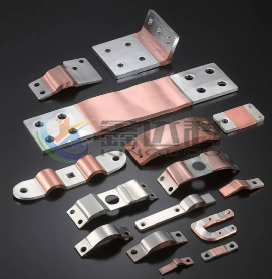
Copper and aluminum busbars are widely used in battery packs. Nowadays, the busbars are mostly made of multilayer copper foil/aluminum foil laminates as the base material, and are fabricated through a...
2026-08-05 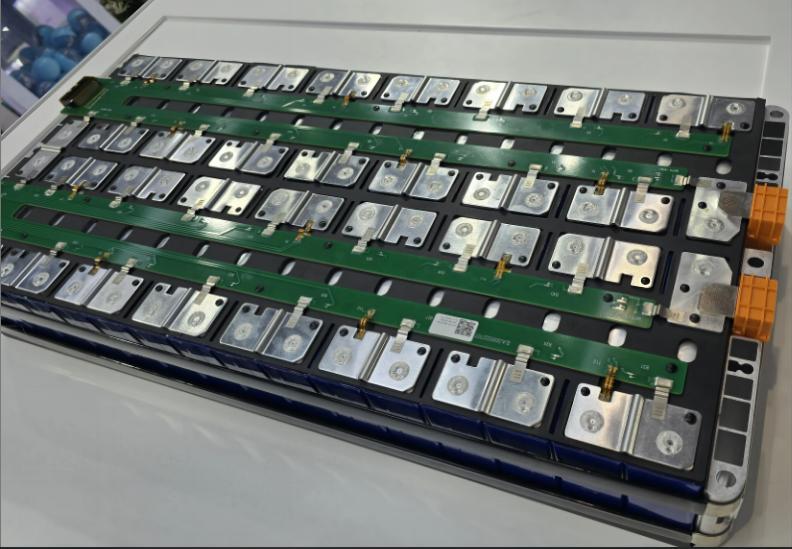
The CCS integrated busbar is mainly composed of signal acquisition components (such as FPC, PCB, FFC, etc.), plastic structural parts, nickel strips, copper busbars, aluminum busbars, etc. These are c...
2025-08-15 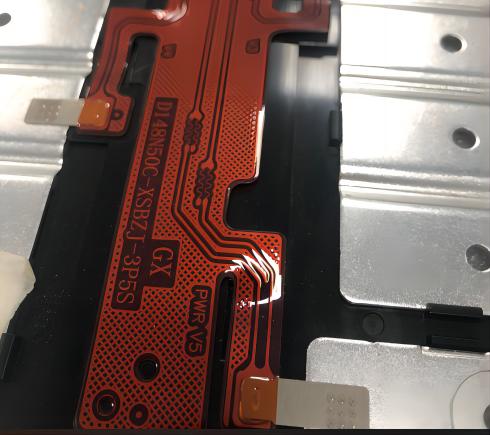
Nickel is a metal with significant industrial value, with a melting point of 1453°C, a boiling point of 3075°C, and a specific gravity of 8.8 g/cm³. It has excellent corrosion resistance, is not easil...
2025-08-15 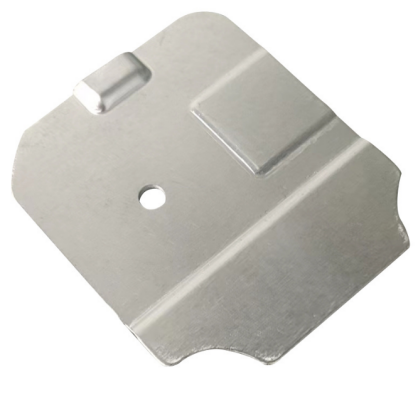
Product Name: Power battery soft aluminum busbar, battery module welding flexible connector aluminum busbar, battery soft aluminum busbar Product Material: 1060 O-temper aluminum foil strip, aluminum ...
2023-05-04Phone:
0510-87183933