Jiangsu Xindake Connection Technology Co., Ltd. offers you free information and the latest news on battery connectors, battery pack inserts, e-bike battery nickel strips, nickel-plated strips and more. Stay tuned!
Jiangsu Xindake Connection Technology Co., Ltd. offers you free information and the latest news on battery connectors, battery pack inserts, e-bike battery nickel strips, nickel-plated strips and more. Stay tuned!


The copper busbar manufacturer explains the surface treatment process and techniques for copper busbars. There are three methods for treating the surface of copper busbars: either applying a layer of protective varnish, plating a layer of protective agent, or tin plating. The tin plating solution is a bright acid tin plating solution, mainly composed of stannous sulfate and sulfuric acid, and its content varies depending on the additives used in production.
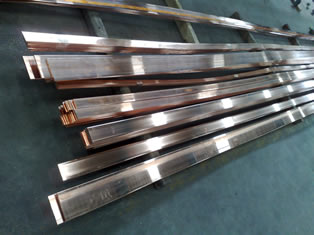
Copper busbar: also known as copper main bus, copper bus, or copper collector busbar, grounding copper busbar, it is made of copper material, with a rectangular or chamfered (rounded) rectangular cross-section long conductor. Those made of aluminum material are called aluminum busbars. In the circuit, it functions to transmit current and connect electrical equipment. The quality requirements for copper busbars follow the GB/T5585.1-2005 standard.
The three surface treatment processes for busbar are as follows
1. Copper busbar painting;
2. Copper busbar tin plating;
3. Copper busbar coating protective agent;
Below is a comprehensive introduction to these three processes.
1. Copper busbar painting
1.1. This process belongs to obsolete technology and is now rarely used.
1.2. The busbars of three-phase AC circuits are all painted black, with color labels pasted in prominent positions: phase A is yellow, phase B is green, phase C is red, the neutral or zero line is painted light blue, the safety ground wire is painted with alternating yellow and green stripes, and those whose polarity or phase sequence cannot be distinguished are painted white.
1.3. Apply brown paint to the positive pole of the DC circuit, blue paint to the negative pole, and light blue paint to the grounded neutral line.
1.4. Check whether the paint on the busbar is uniform and whether there is any sagging.
1.5. Busbar painting can be done by spray or brush paint. The color should be even, edges neat, with no paint leaks or dripping. Busbar connections must not stain with paint.
1.6. For the same component, the paint boundaries of the busbars at the same end should not show obvious irregularities.
1.7. The paint boundary of the busbar should be flush and aligned.
2. Tinning of copper busbars
2.1. Mature process. Short operating cycle, widely adopted.
2.2. Weakness: The surface darkens over time and cannot be done manually. Not environmentally friendly!
2.3. Process flow
2.3.1. Surface polishing and degreasing pretreatment → pure water rinse → plating high Pb-Sn alloy → tap water rinse → pure water rinse → tin plating → tap water spray rinse → neutralization (Na2HPO4 Na3PO4) → tap water spray rinse → immersion in stearic acid → tap water spray rinse → hot pure water immersion rinse → drying.
2.4. Copper busbar surface treatment process polishing: Whether manual or mechanical, it is slow and tiring, with severe dust. It cleans the surface oxide scale and tiny burrs. (Using quartz sand, glass beads).
2.5. Functions and Process Flow of Each Plating Solution Component
2.6. The main components of bright sulfate tin plating solution are stannous sulfate and sulfuric acid, and their content varies in production depending on the additives used.
2.6.1. Stannous sulfate is the main salt, with a concentration generally controlled at 40–100 g/L. However, production experiments have shown that although high concentrations of stannous sulfate can increase cathode current density and accelerate deposition rate, they significantly reduce the dispersing ability of the plating solution, and cause the plated layer to have coarse crystals, smaller bright areas, and even greatly shorten the treatment cycle of the plating solution.
2.6.2. The SnSO4 content should be controlled between 20 and 60 g/L. If the lower limit is taken, compensation can be made by increasing the circulation speed of the plating solution and the movement speed of the electrodes (cathode or anode), and excellent products can still be plated, but it should not be too low.
2.7. Sulfuric acid has the functions of reducing the activity of stannous ions, preventing their hydrolysis, and improving the conductivity of the plating solution and the anodic current efficiency. When the amount of sulfuric acid is insufficient, stannous ions are easily oxidized to tetravalent tin.
2.8. From the perspective of kinetics, when there is enough H2SO4, the hydrolysis of divalent tin can be slowed down, stabilizing the plating solution. In actual production, the H2SO4 content is generally 80–150 mL/L.
2.9. Additives
2.9.1. Tin plating brighteners are generally formulated by blending the main brightener, auxiliary brightener, and carrier brightener.
2.9.2. Main brightener
2.9.3. There are many types of acid bright tin plating brighteners, which can be summarized into two main categories: The first category mainly includes derivatives of aromatic aldehydes, aromatic ketones, esters, and unsaturated organic acids; the second category mainly includes syrfalkyl compounds (the basic structural units are -CH=N—CH=CH- or -CH=CH-CH=N-), which are formed by the condensation of acetaldehyde with o-methylpropylamine. These are effective brightening agents for acid bright tin plating and can be used alone or in combination with the first category of brighteners. When used in combination with the first category, they can significantly expand the brightening range and effectively eliminate the whitening of the coating.
2.9.4. The brightening effect of organic brighteners mainly manifests as adsorption on the cathode. If the adsorption on the cathode is too strong or too weak, an ideal bright plated layer cannot be obtained. When the adsorption is too strong, the desorption potential is too negative, hydrogen evolution is severe, and pinholes are easily formed; when the adsorption is too weak, the desorption potential is relatively positive, and the plated layer is coarse in crystallization. Only appropriate adsorption can achieve a good brightening effect.
2.9.5. Therefore, when formulating combined brightening agents, additives with strong, moderate, and weak adsorption should be organically combined to achieve moderate adsorption and a wider range of adsorption potential, with the specific combination quantities determined through experimentation. Currently, primary brighteners that can be used include benzylideneacetone, vanillin, benzophenone, and O-chlorobenzaldehyde, among which benzylideneacetone is commonly used.
2.9.6. Auxiliary Brightening Agent
2.9.7. Because primary brighteners can only exert their brightening effect within a certain current density range, using them alone cannot achieve an ideal coating. However, when used in conjunction with auxiliary brighteners, a synergistic effect can be achieved, thereby refining the coating's crystal structure and further expanding the brightening current density range. Additives of this type include aliphatic aldehydes and some organic acids, commonly used ones being formaldehyde, acrylic acid, cinnamic acid, and so on.
2.9.8. Carrier Brightener
2.9.9. Most organic brighteners have very low solubility in water, so the amount adsorbed on the cathode is also small, making them unsuitable to be added to the plating solution alone; some organic brighteners may precipitate from the plating solution during the electroplating process due to reactions such as oxidation and polymerization. Therefore, to fully realize the effect of the brighteners, it is necessary to add some surfactants, which, through their solubilizing effect, can increase the content of brighteners in the plating solution. These surfactants are called carrier brighteners, also known as dispersants. At the same time, they also have functions such as wetting and refining crystallization.
2.9.10. The earliest carriers for brightening agents were some anionic surfactants, but their adsorption on the cathode was weak. Later, non-ionic surfactants such as polyethylene oxide and polypropylene oxides were developed, which not only have wetting and dispersing effects but also inhibit H2 evolution and Sn2 discharge, thereby refining the grains of the plated layer. Among the above dispersants, OP emulsifiers are widely used.
2.10. Stabilizer
2.10.1. For acidic tin plating solution primarily using stannous sulfate as the main salt, it becomes cloudy after continuous operation for half a month, making it difficult to plate qualified products, requiring the addition of certain stabilizers.
2.10.2. Common acidic tin plating stabilizers are mostly complexing agents of Sn²⁺, such as oxalic acid, citric acid, tartaric acid, etc., and the combined use is more effective than using them individually. In addition, a certain catalyst also has the effect of stabilizing the plating solution. Production has shown that in continuous production, the plating solution with this catalyst added can remain clear and free of turbidity for more than half a year.
2.11. Flocculant
2.11.1. So far, there is still no stabilizer that can maintain the plating solution stable and clear for a long time, so Sn4 inevitably forms. As Sn4 accumulates, the plating solution gradually becomes turbid, sediment increases, the bright areas of the coating become smaller, uniformity worsens, and even phenomena such as darkening and mottling appear. At this time, it is necessary to treat the plating solution with a flocculant.
2.11.2. Flocculants are divided into inorganic and organic types. Inorganic flocculants include various salts, active silica, etc. Organic flocculants can be classified into three types: anionic, cationic, and nonionic. Anionic flocculants mainly include epoxy amine-based copolymers, polyethyleneimine, polyamine derivatives, etc. Cationic flocculants mainly include hydrolyzed polyacrylamide, polyacrylamide, sodium sulfonate, etc. Nonionic flocculants mainly include polyacrylamide, urea-formaldehyde polymers, etc.
2.11.3. The combined use of polyacrylamide and inorganic flocculants is very effective, with no impact on the performance of the plating solution, but the settling speed is too slow, taking more than 48 hours. Epoxy-amine copolymers are relatively effective, but excessive use can have some impact on the plating solution, and in severe cases, can affect the brightness of the coating. However, the settling speed is particularly fast, generally able to fully precipitate within 2 hours (do not use excessively).
3. Copper Busbar Coating Protector
3.1. Advantage: Maintains the original color of the copper busbar, slightly lower cost than tin plating. Disadvantage: long operation cycle.
3.2. Process Flow
3.3. Pre-polishing treatment → rinse with pure water → acid pickling and passivation of the workpiece → dry the moisture → JLR-510 protection treatment → rinse clean with running water → soak in hot water (around 100°C, used to heat the workpiece, the purpose is to let the moisture evaporate or dry naturally) → dry → package and seal
3.4. Copper busbar surface treatment process polishing: Whether manual or mechanical, it is slow and tiring, with severe dust. It cleans the surface oxide scale and tiny burrs. (Using quartz sand, glass beads).
3.5. The main process of acid pickling and passivation is: pre-treatment (surface cleaning) → acid pickling and passivation followed by rinsing → post-treatment (product protection). The main content of the pre-treatment is to clean the surface of the objects to be pickled and passivated, removing various oils, welding spatter, weld seams, scale, etc., from the surface. Acid pickling and passivation can be carried out separately, or they can be combined into a single, simultaneous process. When acid pickling and passivation are carried out separately, it is common to immerse the entire workpiece in the acid pickling and passivation solution, which is suitable for small parts or pipelines and linear equipment where liquid circulation is possible. When acid pickling and passivation are combined into a single process, immersion in liquid (suitable for the same range as above) can be used, or a paste can be applied. Since the paste is easy to apply, it can remain in place for a longer period of time in different positions without running off or losing wettability, thereby ensuring the necessary duration for acid pickling and passivation.
3.6. Copper oxidation protection agent JLR-510
The copper oxidation protective agent has stable performance, is non-toxic, odorless, non-volatile, non-hygroscopic, non-decomposing, non-sublimating, and does not attract dust or harmful gases such as H2S and SO2. It can effectively resist corrosion of metals caused by humid heat, salt spray, and mold, and has good wettability and high corrosion resistance. The copper oxidation protective agent also has excellent electrical properties, as well as triple effects of dehydration, anti-discoloration, and anti-rust. It does not corrode metals and provides significant anti-corrosion protection for copper, silver, and imitation gold plating, especially effectively preventing discoloration of copper and imitation gold surfaces. This product can also be combined with other additives for use, such as water-based or solvent-based sealers, gloss coatings, and antirust agents, playing an invaluable role in rust prevention for metals like copper, gold, silver, zinc, and steel.
3.7. It is recommended to use various plastic containers, and metal containers should not be used unless they are copper containers. Then, apply the JLR-510 copper anti-oxidation protective solution directly.
3.8. This working solution can provide protection at both room temperature and under heated conditions, but it is recommended to use it under heated conditions, as this results in higher production efficiency and better effects. However, the method of heating should be chosen appropriately. If an internal heating method is used, the heating tube must be made of copper, or quartz and polytetrafluoroethylene (Teflon) heating tubes should be used. Heating tubes made of other metal materials will alter the properties of the solution and are not suitable for use.
3.9. Usage Instructions:
3.9.1. After the workpiece has been degreased, chemical polishing and cleaning? B, after electroplating bright acid copper or other copper; rinse twice with running water, then clean once with deionized water (this can introduce as few impurities as possible into the solution, thereby extending the service life of the solution);
3.9.2. If operating at room temperature, it is necessary to treat in the working solution for 5-10 minutes. In principle, it should not be less than 5 minutes, because at room temperature, the passivation film formed by this solution on the copper layer will develop in about 5 minutes. If the product requires a salt spray test of more than 8 hours, it is recommended to use it under heated conditions;
3.9.3. If used under heated conditions, it is recommended to control the temperature between 60-70°C, preferably around 65°C. Under these conditions, copper oxidation protection can form a complete, uniform, and glossy protective film layer in just 2 minutes (the recommended treatment time is 3 minutes), achieving the best anti-discoloration effect.
3.9.4. After processing in the above manner, rinse with running water for 1 minute, spin dry until there are no water droplets on the surface of the workpiece, then either dry it at a temperature of 70-80°C or wipe off the water droplets on the surface.
3.10. Bath Solution Maintenance:
3.10.1. The service life of the working solution largely depends on how thoroughly it is cleaned before use. Parts that have undergone pickling must be thoroughly rinsed with water to avoid any residual acid entering the passivation solution. (Increased acidity of the solution can dissolve the film on copper parts, rendering it non-protective.) Therefore, the passivation solution should be kept separate from the pickling solution to prevent the introduction of hexavalent and trivalent chromium ions. Additionally, before complex products enter the anti-discoloration bath, any residual chemicals must be avoided. Only by doing so for a long period can the solution achieve its optimal service life.
3.10.2. Selection of equipment: The choice of materials for the equipment is crucial. Containers are generally made of plastic, and heating pipes must be made of copper, or an external heating method can be chosen (our company can provide the relevant design and temperature control devices).
3.10.3. Do not allow other metal parts to enter the solution.
3.10.4. The judgment of solution lifespan is generally based on pH value. The freshly prepared tank solution usually has a pH of 6±1, which is nearly neutral. When the solution's pH exceeds 6-7±3, the solution should be discarded. If the requirement for color change prevention is not high, it can be determined by testing. Generally, this solution has good passivation effects when the pH is between 2 and 9. If high quality is required, the pH can be controlled within the range of 5-7 and 4-8.
3.10.5. In addition, the water tank before the anti-discoloration solution needs to have its pH value checked regularly with pH test paper. If it is found that the clean water has deviated from neutrality, it is recommended to replace the water immediately; otherwise, the anti-discoloration agent will be affected. V. Wastewater Treatment: The waste solution of this product can be discharged directly.
3.11. Performance test data of copper protective passivation solution: Treatment conditions: copper anti-oxidation protective solution, temperature 65-70°C, time 2 minutes. Comparison conditions: traditional chromic acid treated products.
The above is the process method for copper busbar surface treatment provided by the copper busbar manufacturer. Do you understand it? If a copper busbar is exposed to the air for a long time, it can easily be damaged. Therefore, a protective film is needed to keep the copper busbar from getting damp, while also protecting it from acids and alkalis and from sun exposure. This is the content compiled by the editor for you. Thank you for browsing!
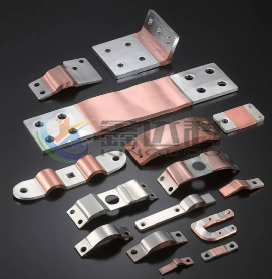
Copper and aluminum busbars are widely used in battery packs. Nowadays, the busbars are mostly made of multilayer copper foil/aluminum foil laminates as the base material, and are fabricated through a...
2026-08-05 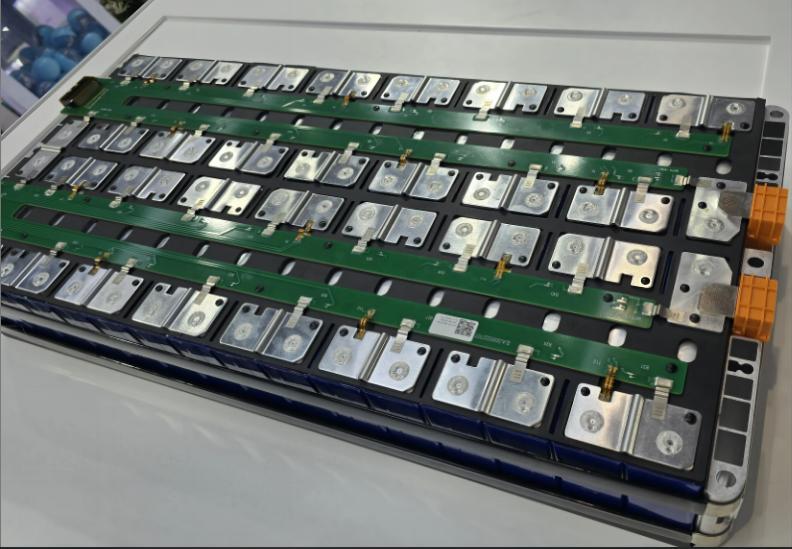
The CCS integrated busbar is mainly composed of signal acquisition components (such as FPC, PCB, FFC, etc.), plastic structural parts, nickel strips, copper busbars, aluminum busbars, etc. These are c...
2025-08-15 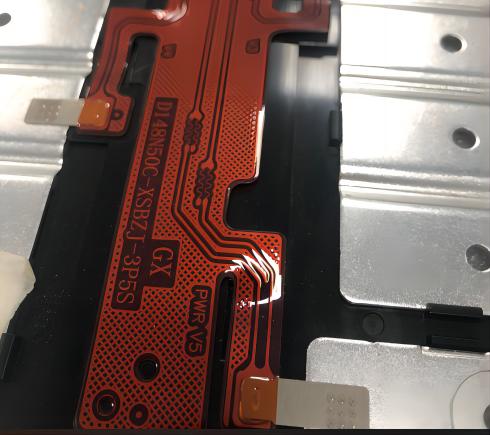
Nickel is a metal with significant industrial value, with a melting point of 1453°C, a boiling point of 3075°C, and a specific gravity of 8.8 g/cm³. It has excellent corrosion resistance, is not easil...
2025-08-15 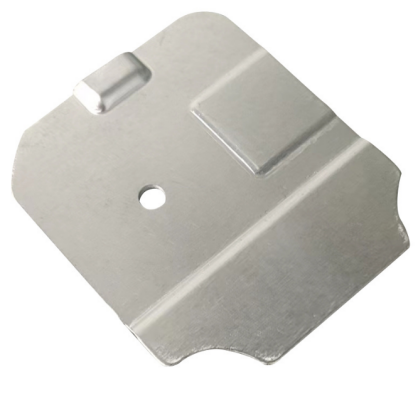
Product Name: Power battery soft aluminum busbar, battery module welding flexible connector aluminum busbar, battery soft aluminum busbar Product Material: 1060 O-temper aluminum foil strip, aluminum ...
2023-05-04Phone:
0510-87183933