Jiangsu Xindake Connection Technology Co., Ltd. offers you free information and the latest news on battery connectors, battery pack inserts, e-bike battery nickel strips, nickel-plated strips and more. Stay tuned!
Jiangsu Xindake Connection Technology Co., Ltd. offers you free information and the latest news on battery connectors, battery pack inserts, e-bike battery nickel strips, nickel-plated strips and more. Stay tuned!


Copper busbars, also known as copper main bars, copper bus conductors, or copper grounding bars, are made of copper material with a rectangular or chamfered (rounded) rectangular cross-section. Those made of aluminum are called aluminum busbars. In circuits, they serve the purpose of conducting current and connecting electrical equipment. The surface treatment methods mainly include three types: painted copper busbars, tin-plated copper busbars, and copper busbars coated with protective agents.
The busbar painting process is considered an outdated and obsolete technique and is rarely used nowadays. The process involves coating the three-phase AC circuit busbars with black paint, attaching color labels in prominent positions: Phase A is yellow, Phase B is green, Phase C is red, the neutral or zero line is painted light blue, the safety grounding line is painted alternately with yellow and green, and white paint is used for lines where polarity or phase sequence cannot be distinguished. The busbar tin plating process is mature, with a short operation cycle and is widely adopted. Its drawback is that over time the surface darkens; it cannot be done manually and is not environmentally friendly. The process workflow is: surface polishing and degreasing pretreatment → pure water rinse → high Pb-Sn alloy plating → tap water rinse → pure water rinse → tin plating → tap water spray rinse → neutralization (Na2HPO4, Na3PO4) → tap water spray rinse → stearic acid immersion → tap water spray rinse → hot pure water immersion → drying. The busbar coating protective agent process has the advantage of maintaining the original color of the copper busbar and is slightly cheaper than tin plating. Its drawback is the long operation cycle. The process workflow is: polishing pretreatment → pure water rinse → acid pickling and passivation of the workpiece → drying the moisture → JLR-510 protective treatment → thorough rinsing with running water → hot water immersion (around 100°C, to heat the workpiece and allow the moisture to evaporate or dry naturally) → drying → packaging and sealing.
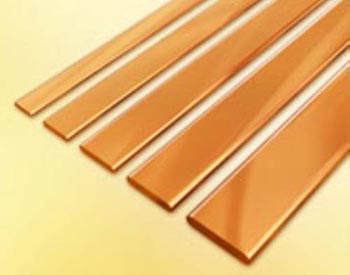
Tin plating on the surface of copper busbars is not only to prevent the copper busbars from oxidizing but also to improve the contact surface of the copper busbar connections. Moreover, because a metal-tin and copper bonding layer forms an alloy, it enhances the adhesion of the copper busbar plating. In addition, metallic tin has good conductivity. It has good density and high smoothness, enhancing the wear resistance of the plated parts.
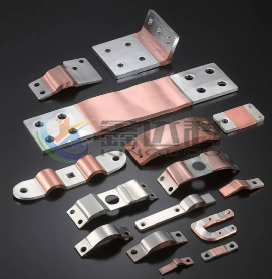
Copper and aluminum busbars are widely used in battery packs. Nowadays, the busbars are mostly made of multilayer copper foil/aluminum foil laminates as the base material, and are fabricated through a...
2026-08-05 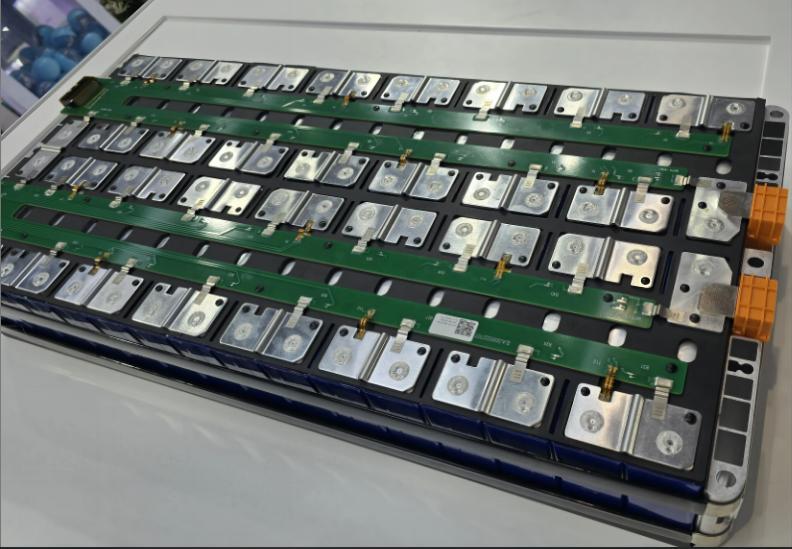
The CCS integrated busbar is mainly composed of signal acquisition components (such as FPC, PCB, FFC, etc.), plastic structural parts, nickel strips, copper busbars, aluminum busbars, etc. These are c...
2025-08-15 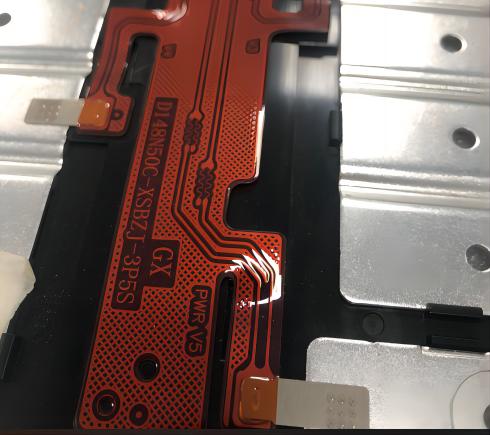
Nickel is a metal with significant industrial value, with a melting point of 1453°C, a boiling point of 3075°C, and a specific gravity of 8.8 g/cm³. It has excellent corrosion resistance, is not easil...
2025-08-15 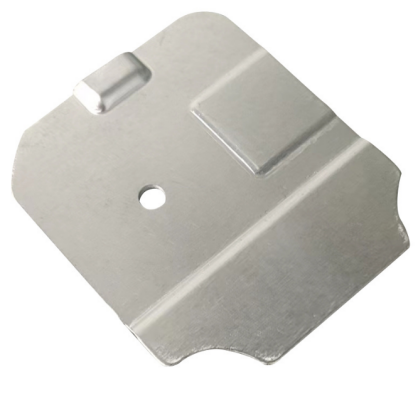
Product Name: Power battery soft aluminum busbar, battery module welding flexible connector aluminum busbar, battery soft aluminum busbar Product Material: 1060 O-temper aluminum foil strip, aluminum ...
2023-05-04Phone:
0510-87183933